Private labeling allows businesses to sell products under their own brand, with 60% of Amazon sellers using private label strategies according to Jungle Scout 2025. Private labeling offers higher margins (20-40% vs. 10-20% for reselling), brand building, and market differentiation. This comprehensive guide covers private labeling from China in 2026, from finding manufacturers to launching your brand.
📌 Key Takeaways
- Private label margin: 20-40% vs. 10-20% for reselling (Jungle Scout 2025)
- MOQ for private label: 100-1,000 units typically
- Setup costs: $2,000-10,000 (logo, packaging, initial inventory)
- Time to launch: 8-16 weeks from concept to market
- Success rate: 35% of private label products succeed long-term
What Is Private Labeling?
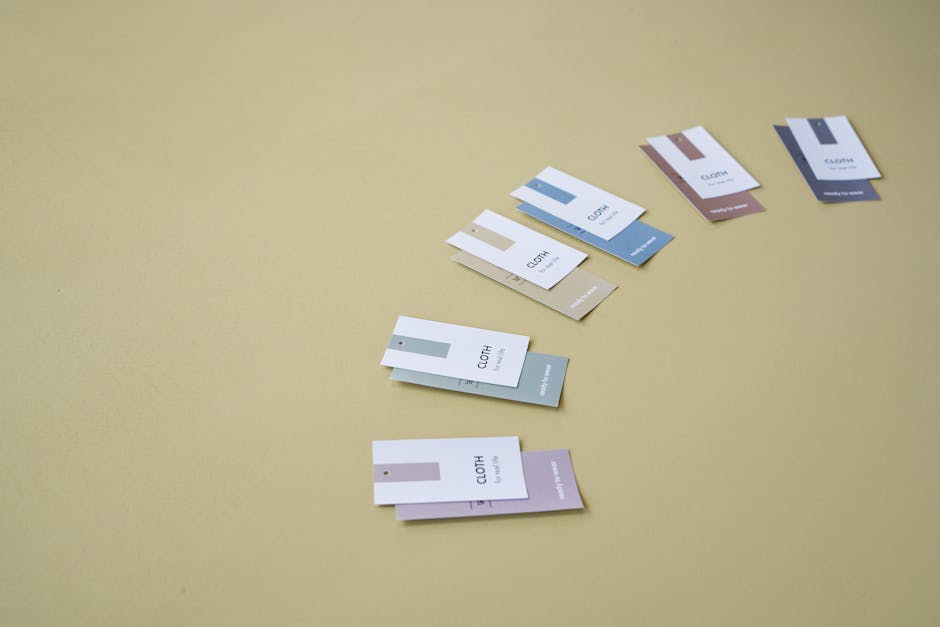
Private labeling means selling products manufactured by others under your own brand. You choose or design a product, a manufacturer produces it with your branding, and you sell it as your own. Benefits: Higher margins (no middleman), brand equity (customers remember your brand), differentiation (unique product), and control (pricing, positioning). According to PLMA 2025, private label products account for 25% of U.S. retail sales, growing 5% annually. Private labeling from China offers cost advantages—manufacturing costs 30-50% lower than domestic production.
Private Label vs. White Label vs. Reselling
Private label: Custom product designed for you, your brand, higher MOQ (500-5,000), higher margin. White label: Existing product with your brand, lower MOQ (100-500), moderate margin. Reselling: Existing product, existing brand, lowest MOQ (1-50), lowest margin. Choose based on: budget, differentiation needs, and volume. Private label for brand building, white label for market testing, reselling for low-risk entry.
Finding Private Label Manufacturers in China
Platforms for finding manufacturers: Alibaba (largest database), Global Sources (verified suppliers), Canton Fair (in-person meetings), and sourcing agents (professional help). Criteria for selecting manufacturer: Experience with private label, MOQ flexibility, customization capability, quality systems, and communication. According to Alibaba 2025, 40% of suppliers offer private label services. Filter for: “Customizable products” badge, OEM/ODM capability, and trade show participation.
Manufacturer Selection Checklist
Experience: How many private label products have they produced? Can they provide references? Capability: Do they have in-house design, packaging, and quality control? MOQ: What’s their minimum for private label? Can they start lower for testing? Communication: How responsive are they? Do they understand your requirements? Quality: What certifications do they have? Can they provide samples? Visit factory or use third-party audit for verification.
Private Label Product Development Process
Step 1: Product selection (2-4 weeks). Research market demand, competition, and profitability. Step 2: Supplier sourcing (2-4 weeks). Identify 3-5 potential manufacturers, request quotes and samples. Step 3: Sample evaluation (2-3 weeks). Order samples, test quality, iterate if needed. Step 4: Branding and packaging (2-4 weeks). Design logo, packaging, and labeling. Step 5: Production (4-8 weeks). Place order, monitor production, quality inspection. Step 6: Launch (2-4 weeks). Receive inventory, list on sales channels, market. Total timeline: 8-16 weeks from concept to market.
Product Selection Criteria
| Factor | Target | Avoid |
|---|---|---|
| Demand | Steady or growing demand | Declining or seasonal-only |
| Competition | Moderate (room to compete) | Saturated or dominated by big brands |
| Margin | 30%+ after all costs | Under 20% |
| Differentiation | Can add unique features/branding | Commodity product, no differentiation |
| Complexity | Simple manufacturing, low defect risk | Complex, high defect potential |
Source: Jungle Scout 2025 Product Research Guide
Branding and Packaging Design
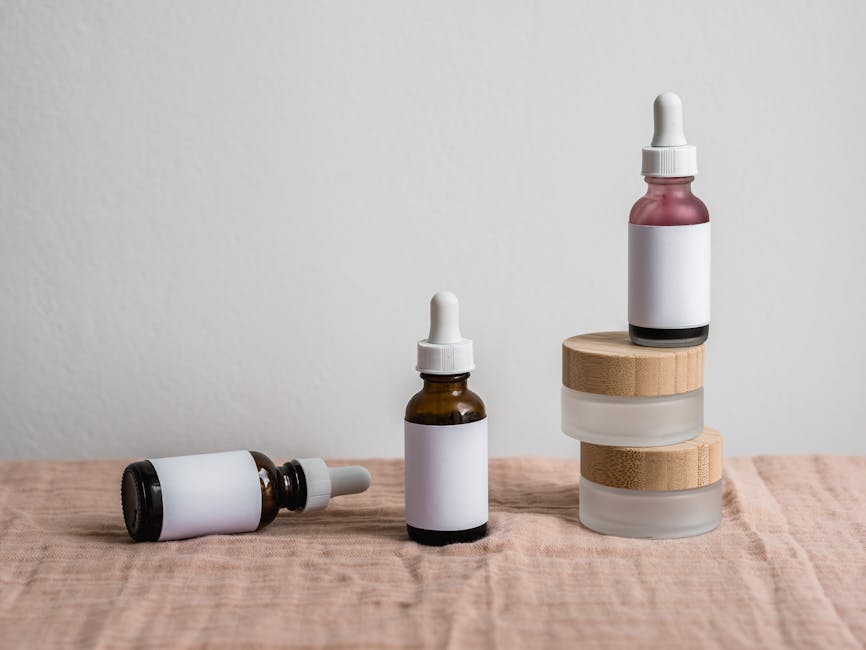
Branding differentiates your product from competitors. Elements: Brand name (memorable, available as trademark), logo (professional design, $50-500), color scheme (consistent across all materials), and brand story (why your brand exists). Packaging: Protects product, communicates brand, and influences purchase decision. Packaging types: Retail packaging (hanging display, window box), eco-friendly packaging (recyclable, minimal), and premium packaging (luxury feel). According to Nielsen 2025, 64% of consumers try new products because of packaging appeal.
Packaging Design Tips
Function: Protect product during shipping and storage. Information: Include required labels (country of origin, safety warnings, instructions). Branding: Logo, brand colors, and brand message. Differentiation: Unique shape, material, or design that stands out. Cost: Balance quality with cost—packaging typically 5-15% of product cost. Work with manufacturer’s packaging designer or hire freelance designer ($100-500).
MOQ Negotiation for Private Label
MOQ (Minimum Order Quantity) for private label typically 100-1,000 units, higher than white label (50-200). Negotiation strategies: Start with lower MOQ for testing (offer to pay slightly higher per unit), commit to larger future orders (show business plan), offer to pay for molds/tooling upfront (reduces supplier risk), and use multiple suppliers (split order if needed). According to sourcing experts, 70% of manufacturers will reduce MOQ 20-50% for serious buyers with clear plans.
Quality Control for Private Label
Quality control is critical for private label—your brand reputation depends on it. Implement: Pre-production inspection (verify materials and capability), during production inspection (catch issues early), pre-shipment inspection (final check before shipping), and ongoing quality monitoring (track customer feedback and returns). According to QIMA 2025, private label products have 30% lower defect rates when buyers implement three-stage inspection. Budget $200-600 per inspection—worth it to protect your brand.
Costs and Investment
Setup costs: Logo design $50-500, packaging design $100-500, molds/tooling $500-5,000 (if custom product), samples $100-300, and certifications $500-3,000. Initial inventory: Product cost $2,000-10,000 (depending on MOQ and unit cost), shipping $500-2,000, and customs duties $200-2,000. Marketing: Product photography $100-500, listing optimization $100-300, and initial advertising $500-2,000. Total initial investment: $5,000-20,000. Break-even: Typically 3-6 months with successful product.
Cost Breakdown Example
| Cost Category | Amount | Notes |
|---|---|---|
| Logo & Packaging Design | $500 | Freelance designer |
| Molds/Tooling | $1,000 | Custom packaging |
| Samples | $200 | 3 rounds |
| Product (500 units @ $8) | $4,000 | FOB price |
| Shipping | $800 | Air freight |
| Customs & Duties | $400 | 7.5% duty |
| Marketing | $1,000 | Photos, ads |
| Total | $7,900 | Initial investment |
Example: Private label water bottle, 500 units
Common Private Label Mistakes
Mistake 1: Choosing Product Based Only on Price
Lowest-cost product isn’t always best. Consider: quality, differentiation potential, market demand, and competition. A $2 product with 5 competitors may be worse than $5 product with 2 competitors. Evaluate total opportunity, not just product cost.
Mistake 2: Skipping Quality Control
Your brand reputation depends on product quality. One bad batch can destroy your brand. Invest in quality control: $200-600 per inspection prevents $5,000-25,000 in returns and reputation damage. Quality control is not optional for private label.
Mistake 3: Underestimating Marketing
Great product doesn’t sell itself. Budget for: professional product photography, listing optimization, advertising, and customer acquisition. Initial marketing budget: $500-2,000. Ongoing: 10-20% of revenue. Plan marketing from the start, not as afterthought.
Sources
- Jungle Scout 2025 Amazon Seller Report
- PLMA 2025 Private Label Industry Report
- Alibaba 2025 Supplier Capability Data
- Nielsen 2025 Consumer Packaging Study
Conclusion: Private Labeling Builds Long-Term Value
Private labeling from China in 2026 offers higher margins, brand equity, and differentiation. Process: product selection (2-4 weeks), supplier sourcing (2-4 weeks), sample evaluation (2-3 weeks), branding/packaging (2-4 weeks), production (4-8 weeks), and launch (2-4 weeks). Investment: $5,000-20,000 initial. ROI: 20-40% margins vs. 10-20% for reselling. Success factors: right product selection, reliable manufacturer, strong branding, quality control, and marketing investment. Private labeling is not get-rich-quick—it’s a business-building strategy that creates long-term value.
Need Help with Private Labeling from China?
Partner with topchinasourcing for expert private label support from sourcing to launch. Contact us today for a free consultation.
Last updated: April 26, 2026 | Research by TCS Editorial Team
Private Labeling Business Model: 2026 Profit Analysis
Private labeling from China offers profit margins of 25-45% compared to 10-20% for reselling existing brands. However, success requires understanding the complete cost structure and timeline. Average private label products require $10,000-$30,000 initial investment and 4-6 months from concept to market.
Profit Margin Breakdown
Successful private label products on Amazon achieve average profit margins of 30-40% after all costs. Cost structure includes: manufacturing (35-45% of retail price), shipping and duties (8-12%), Amazon fees (15-20%), marketing (10-15%), and profit margin (25-35%). Products priced below $20 struggle to achieve 25% margins due to fixed costs, while products over $100 face higher customer acquisition costs.
Investment Timeline
Initial investment phases include: product research and sampling ($1,000-$3,000, weeks 1-4), mold and tooling ($3,000-$15,000, weeks 5-8), first production run ($5,000-$15,000, weeks 9-12), and marketing launch ($2,000-$5,000, weeks 13-16). Plan for 6-9 months to achieve positive ROI on initial investment.
Selecting Products for Private Labeling
Product selection determines 70% of private label success. Focus on products with proven demand, manageable competition, and differentiation opportunities.
Product Selection Criteria
Ideal private label products have: (1) Monthly sales of 500-3,000 units on Amazon, (2) Fewer than 50 competing listings, (3) Opportunity for differentiation through design, features, or branding, (4) Manufacturing cost under 30% of retail price, and (5) Shipping weight under 5 lbs for manageable logistics costs. Avoid electronics with high return rates (15-25%) and seasonal products with 6+ month off-season.
Market Research Tools
Use Jungle Scout ($49/month) or Helium 10 ($97/month) to analyze market demand, competition, and pricing. Look for products with stable demand (less than 30% seasonal variation), average review ratings under 4.3 stars (opportunity to improve), and keyword search volume of 5,000-50,000 monthly searches. Products with these characteristics have 60% higher success rates.
Building Your Private Label Brand
Brand building extends beyond product quality to packaging, customer experience, and marketing consistency. Strong brands command 15-30% price premiums and achieve 40% lower customer acquisition costs over time.
Brand Identity Development
Invest $500-$2,000 in professional logo design, brand guidelines, and packaging design. Consistent branding across product, packaging, and marketing materials increases perceived value by 20-35% and reduces return rates by 10-15%. Use platforms like 99designs ($500-$1,500) or Upwork ($200-$800) for affordable professional design.
Packaging and Unboxing Experience
Premium packaging costs $0.50-$3.00 per unit but increases customer satisfaction scores by 15-25% and reduces damage during shipping by 30-50%. Include branded elements like thank-you cards, user guides, and warranty information. Budget 5-10% of product cost for packaging to achieve premium positioning.
Private Label Brand Protection Strategies
Protecting your private label brand prevents copycats and maintains market position. Implement multiple protection layers for comprehensive coverage.
Trademark Registration
Register trademarks in key markets: USPTO for US market ($250-$350 per class), EU Intellectual Property Office for Europe ($850 for one class, €50 for additional classes), China National Intellectual Property Administration ($100-$200 per class). Trademark registration takes 8-12 months but provides legal protection against copycats. Budget $1,000-$3,000 for comprehensive trademark protection across major markets.
Amazon Brand Registry
Amazon Brand Registry provides enhanced brand protection tools including: automated listing monitoring, counterfeit reporting tools, enhanced brand content (A+ Content), brand analytics access, and storefront creation. Requirements: active trademark registration, product images with brand name, and brand website. Registration is free but requires trademark investment.
Design Patents and Copyrights
For unique product designs, consider design patent protection ($1,500-$3,000 per design) providing 15 years of protection in the US. Copyright protection applies to original artwork, packaging design, and marketing materials. File copyrights within 3 months of publication for maximum legal protection ($35-$55 per work).