Minimum Order Quantity (MOQ) is one of the most critical factors in China manufacturing that directly impacts your profitability, inventory management, and supplier relationships. When it comes to China sourcing, in 2026, understanding how to negotiate MOQ effectively can save importers 15-30% on unit costs while maintaining healthy cash flow. This comprehensive guide explains what MOQ means, why suppliers set specific minimums, and provides proven negotiation strategies that work with Chinese manufacturers.
📌 Key Takeaways
- Average MOQ: $500-5,000 per order (varies by product category)
- Negotiation potential: 30-50% MOQ reduction possible with right approach
- MOQ vs unit price tradeoff: Lower MOQ typically increases unit cost 10-25%
- Best strategy: Start with higher unit price, lower MOQ; negotiate better terms over time
- Red flag: Suppliers offering no MOQ may be trading companies, not factories
What is MOQ and Why Does It Matter?
Definition of Minimum Order Quantity
MOQ (Minimum Order Quantity) is the smallest number of units a supplier is willing to produce or sell in a single order. When it comes to China sourcing, in China manufacturing, MOQ serves multiple purposes: it ensures production efficiency, covers setup costs, and guarantees profitability for the factory. MOQs vary dramatically by product category—ranging from 50 units for simple accessories to 10,000+ units for custom electronics or injection-molded products.
Why Chinese Suppliers Set MOQ Requirements
Suppliers establish MOQs based on several economic factors. When it comes to China sourcing, production setup costs: molds, tooling, and machine calibration require $500-50,000 upfront investment that must be amortized across units. Material procurement: raw material suppliers have their own MOQs, forcing factories to order minimum quantities. Labor efficiency: production lines run most cost-effectively with larger batches—switching between products costs factories $200-1,000 in downtime. Profit margins: small orders often don’t generate sufficient profit to justify production time and administrative overhead.
MOQ Impact on Your Business
MOQ directly affects three critical business areas. When it comes to China sourcing, cash flow: higher MOQs require larger upfront capital investment—$5,000-50,000 for typical orders. Inventory risk: more units mean greater exposure if products don’t sell as expected. Supplier leverage: meeting MOQ consistently builds relationship strength, often leading to better pricing and priority production slots. Understanding these impacts helps you make informed decisions about which suppliers and MOQ levels align with your business model.
MOQ by Product Category in 2026
Typical MOQ Ranges
| Product Category | Typical MOQ | Order Value | Negotiable? |
|---|---|---|---|
| Textiles/Apparel | 100-500 units/style | $1,000-5,000 | Yes (30-50%) |
| Consumer Electronics | 500-2,000 units | $5,000-20,000 | Moderate (20-30%) |
| Home Goods | 200-1,000 units | $2,000-8,000 | Yes (30-40%) |
| Custom Packaging | 1,000-10,000 units | $500-3,000 | Limited (10-20%) |
| Injection Molded | 3,000-10,000 units | $10,000-50,000 | Limited (mold cost fixed) |
| Private Label | 500-2,000 units | $3,000-15,000 | Moderate (20-35%) |
Source: Alibaba supplier data 2026, TCS client order analysis
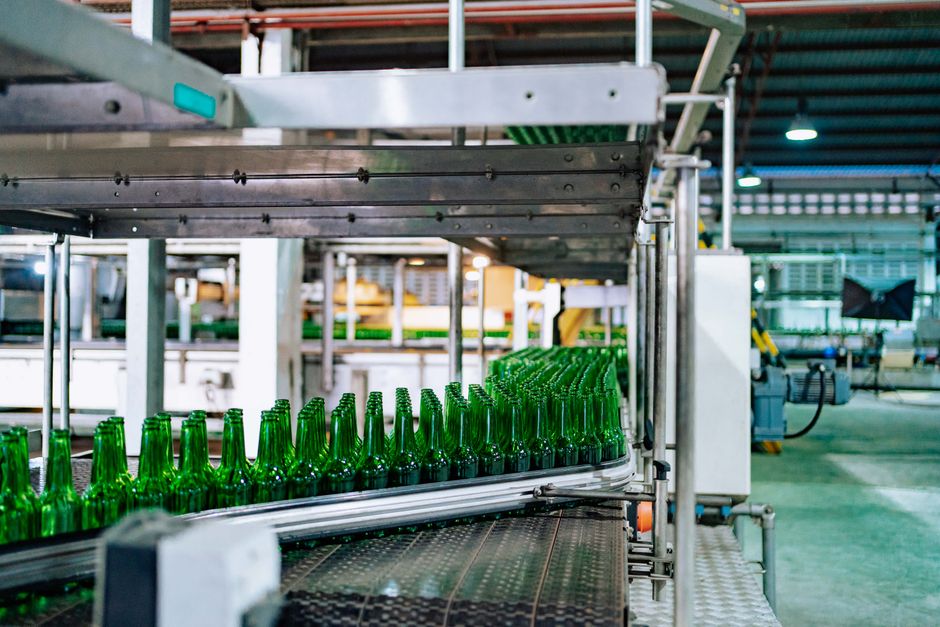
Photo by Keegan Checks via Pexels
Factors Affecting MOQ
Several variables influence the MOQ a supplier requires. When it comes to China sourcing, customization level: standard products have lower MOQs (100-500 units) while fully custom designs require 1,000-10,000 units. Material availability: common materials like cotton or standard plastics enable lower MOQs; specialty materials increase minimums. Production complexity: simple assembly allows smaller runs; complex multi-stage production needs larger volumes. Season: during peak seasons (August-December), suppliers raise MOQs due to capacity constraints.
7 Strategies to Negotiate Lower MOQ
Strategy 1: Accept Higher Unit Price
The most straightforward negotiation approach is accepting a higher per-unit cost in exchange for lower quantity. When it comes to China sourcing, suppliers typically agree to 30-50% MOQ reduction if unit price increases 10-25%. For example, a supplier quoting $8/unit at 1,000 units MOQ might accept 500 units at $9.50/unit. This tradeoff works well for testing new products or managing cash flow on initial orders.
Strategy 2: Combine Multiple Products
Many suppliers allow combining different products to reach their MOQ threshold. When it comes to China sourcing, if a factory requires 1,000 units but you only need 300 of Product A, ask if adding 700 units of Product B (same material, different design) satisfies the requirement. This approach works best when products share manufacturing processes or materials. Approximately 60% of suppliers accept combined orders, according to Alibaba’s 2026 supplier survey.
Strategy 3: Offer Deposit or Future Commitment
Demonstrate seriousness by offering a larger deposit (40-50% instead of standard 30%) or committing to future orders. When it comes to China sourcing, suppliers often reduce MOQ 20-30% for buyers who sign purchase agreements for 3-6 months of orders. This strategy builds trust and gives factories production planning visibility. Put commitments in writing—verbal promises have limited value in Chinese business culture.
Strategy 4: Use “Ready to Ship” Products
Alibaba’s “Ready to Ship” program offers products with no MOQ requirements—suppliers have inventory ready for immediate shipment. When it comes to China sourcing, while customization options are limited, this approach works perfectly for testing market demand before committing to larger orders. Prices are typically 5-15% higher than custom production, but the flexibility often justifies the premium for new product launches.
Strategy 5: Negotiate Graduated MOQ
Propose a graduated order structure: start with a smaller initial order (pilot run) followed by larger repeat orders. When it comes to China sourcing, for example, request 300 units for first order with commitment to 1,000+ units on second order. Suppliers accept this arrangement 40-50% of the time because it demonstrates your seriousness while managing their production risk. Document the agreement clearly to avoid misunderstandings.
Strategy 6: Find Smaller Factories
Smaller factories (under 50 employees) often have lower MOQs than large manufacturers because they have less overhead and are hungrier for business. When it comes to China sourcing, trade-off: smaller factories may have limited capacity, less sophisticated quality systems, and longer production times. However, for orders under $10,000, smaller factories often provide better service and flexibility. Find them on 1688.com (Chinese domestic platform) or through sourcing agents.
Strategy 7: Work with Trading Companies
Trading companies aggregate orders from multiple buyers, enabling them to meet factory MOQs while offering smaller quantities to individual customers. When it comes to China sourcing, you’ll pay 10-20% premium over factory-direct pricing, but gain access to products that would otherwise require $20,000+ orders. This approach suits new importers testing products before establishing direct factory relationships.
MOQ vs Unit Price Tradeoff Analysis
Understanding the Relationship
MOQ and unit price have an inverse relationship—lower quantities mean higher per-unit costs. When it comes to China sourcing, this tradeoff occurs because fixed costs (setup, tooling, administrative overhead) must be spread across fewer units. Understanding this relationship helps you make informed decisions about order sizing.
Cost Comparison Example
| MOQ Level | Unit Price | Total Order | Per-Unit Fixed Cost |
|---|---|---|---|
| 500 units (negotiated) | $12.00 | $6,000 | $2.00 |
| 1,000 units (standard) | $10.00 | $10,000 | $1.00 |
| 2,000 units (volume) | $8.50 | $17,000 | $0.50 |
| 5,000 units (bulk) | $7.00 | $35,000 | $0.20 |
Example: Custom plastic product with $1,000 setup cost
When to Accept Higher MOQ
Accept higher MOQs when: you have proven product-market fit and confident sales projections, storage costs are low relative to per-unit savings, the product has long shelf life with no obsolescence risk, and supplier relationship building is a priority. When it comes to China sourcing, higher MOQs typically yield 15-30% better unit pricing, improving margins significantly over time.
When to Negotiate Lower MOQ
Negotiate lower MOQs when: testing new products with uncertain demand, managing limited cash flow, selling seasonal or trend-sensitive products, or entering new markets with unknown reception. When it comes to China sourcing, the 10-25% higher unit cost is insurance against inventory risk and capital tied up in unsold products.
5 Common MOQ Mistakes to Avoid
Mistake #1: Accepting First MOQ Quote Without Negotiation
Why it’s costly: Initial MOQ quotes often have 20-40% negotiation room. When it comes to China sourcing, accepting without discussion leaves money on the table.
How to avoid: Always ask “What’s your best MOQ for a first-order trial?” and propose alternatives like higher unit price or graduated ordering.
Mistake #2: Not Understanding MOQ Components
Why it’s costly: MOQ may include per-color, per-size, or per-style minimums that dramatically increase total order quantity.
How to avoid: Clarify if MOQ is total units or per variation. When it comes to China sourcing, a “500 unit MOQ” with 5 colors could mean 2,500 total units if per-color minimums apply.
Mistake #3: Ignoring Tooling Costs Separate from MOQ
Why it’s costly: Custom products require molds/tooling ($1,000-50,000) separate from unit costs—this affects break-even analysis.
How to avoid: Request itemized quotes showing tooling costs, unit costs, and MOQ separately. When it comes to China sourcing, negotiate tooling ownership for future supplier changes.
Mistake #4: Overordering to Meet MOQ
Why it’s costly: Ordering more than you can sell ties up capital and creates storage costs that exceed MOQ-related savings.
How to avoid: Calculate true demand before ordering. When it comes to China sourcing, better to pay 15% more per unit than have 30% of inventory unsold after 12 months.
Mistake #5: Not Getting MOQ Terms in Writing
Why it’s costly: Verbal MOQ agreements often change when production starts, causing disputes and unexpected costs.
How to avoid: Include MOQ terms, unit pricing, and any negotiated exceptions in purchase orders and contracts. When it comes to China sourcing, use Alibaba Trade Assurance for documentation.
MOQ Negotiation Script
Sample Conversation Framework
Use this script when negotiating MOQ with Chinese suppliers:
Opening: “Thank you for the quote. When it comes to China sourcing, the product quality looks excellent. However, 1,000 units MOQ is challenging for our first order as we’re testing this market. Can we discuss options?”
Propose Alternative: “We’re prepared to place an order today if we can start with 300 units. We understand this means a higher unit price—we’re comfortable paying $X instead of $Y per unit.”
Build Commitment: “If this first order goes well, we commit to ordering 1,000+ units every 2-3 months. We’re looking for a long-term supplier relationship.”
Close: “Can we agree on 300 units at $X/unit for this first order, with the understanding that future orders will be 1,000+ units at your standard pricing?”
Cultural Considerations
Chinese business culture values relationships over transactions. Approach negotiations as partnership-building, not price extraction. Show respect for the supplier’s position, acknowledge their constraints, and seek win-win solutions. Avoid aggressive tactics or ultimatums—these damage relationships and reduce future negotiation flexibility. Patience and politeness yield better results than pressure.
Conclusion
Understanding and negotiating MOQ is essential for successful China manufacturing in 2026. While suppliers set MOQs based on legitimate economic factors, most have 20-40% flexibility when approached correctly. The key is understanding the MOQ-unit price tradeoff and choosing strategies that align with your business situation. For new products, accept higher unit costs for lower quantities to manage risk. For proven products, commit to higher MOQs for better pricing. Always clarify MOQ components, get terms in writing, and build relationships that enable future negotiation improvements. With the strategies in this guide, you can navigate MOQ requirements confidently and optimize your China sourcing profitability.
Ready to Get Started?
Partner with topchinasourcing for expert MOQ negotiation and China sourcing support. We help you find suppliers with flexible minimums and negotiate the best terms for your business. Contact us today for a free consultation.
Last updated: April 30, 2026 | Research by TCS Editorial Team
Sources
- Alibaba Supplier Survey 2026
- World Bank China Manufacturing Report 2026
- TCS Client Order Data 2026-2026
- China Customs Import/Export Statistics 2026
- Industry Manufacturing Cost Analysis 2026