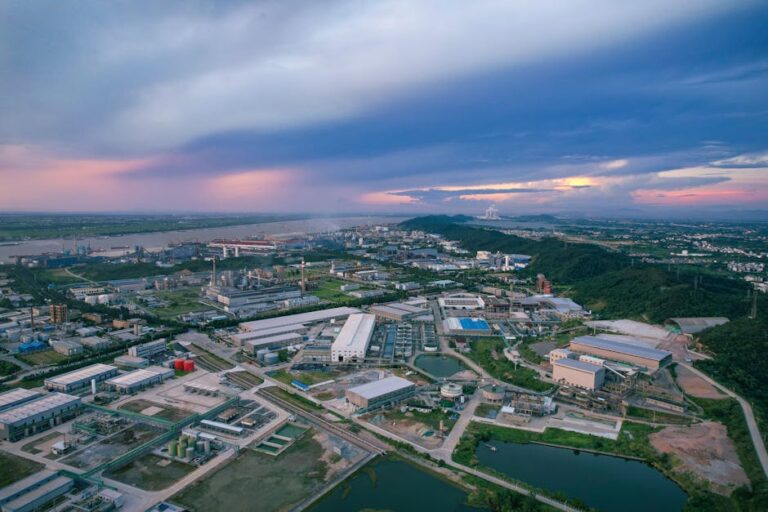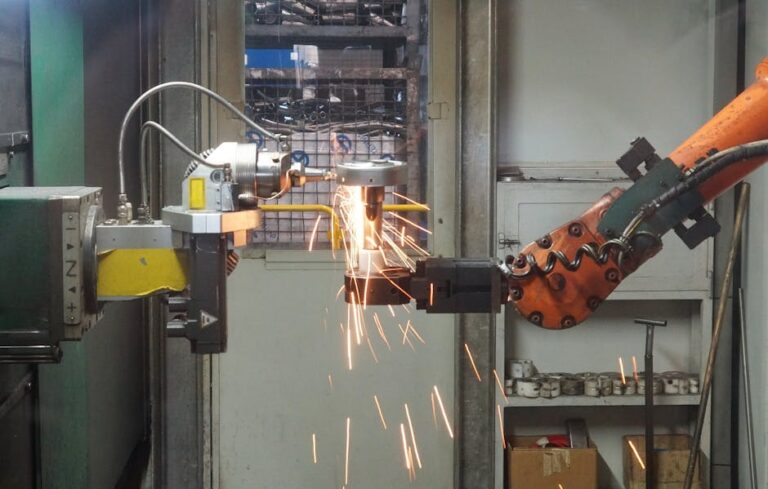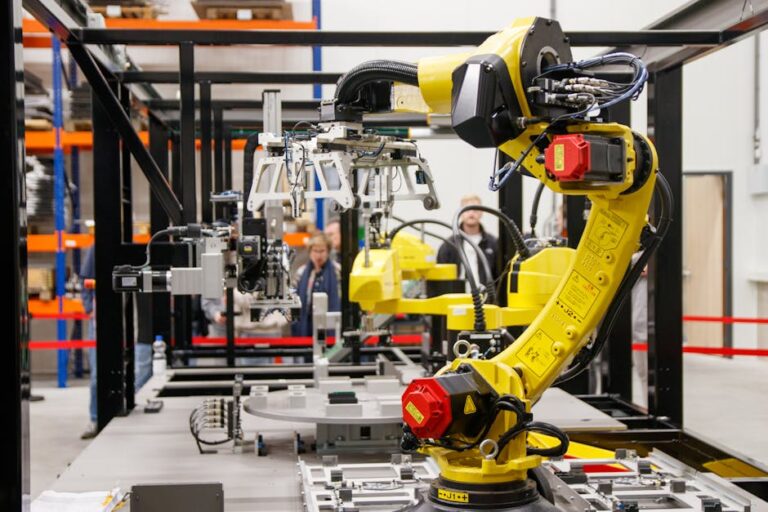
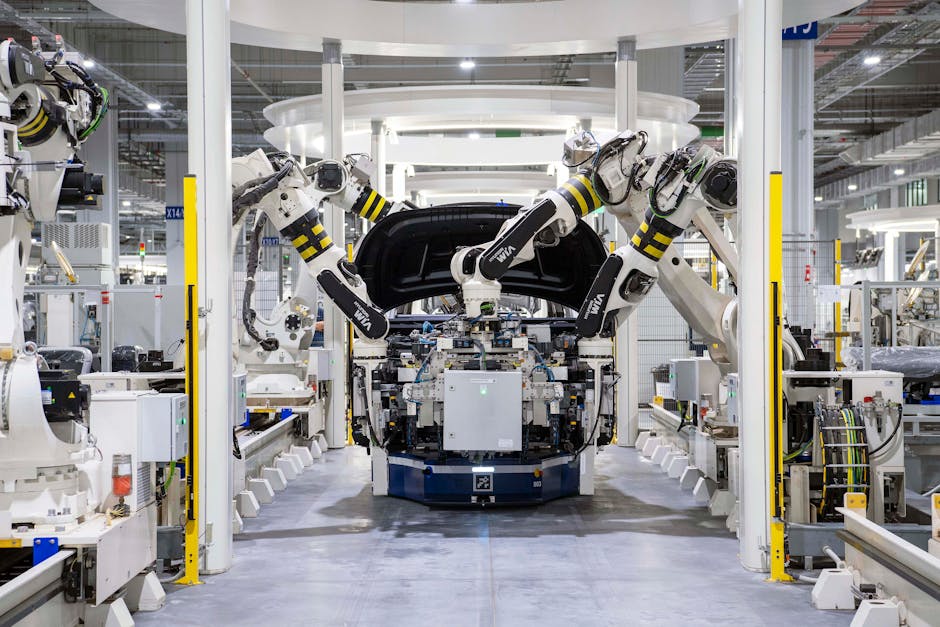
The transformation through China manufacturing automation is creating unprecedented opportunities for importers seeking reliable, high-quality production. From robotic assembly lines to smart factories, Chinese manufacturers are investing billions in automation technology. This 2026 guide examines factory automation trends and how they benefit international buyers.
topchinasourcing connects clients with China’s most advanced automated production facilities. We partner with suppliers on Alibaba and Global Sources who have modernized their operations. Our work with SGS confirms that automated facilities deliver measurable quality improvements.
Key Takeaways
- Investment Scale: China deploying 150,000+ industrial robots annually
- Quality Impact: Automated lines achieve 99.5%+ first-pass yield rates
- Cost Structure: Labor cost savings of 40-60% passed to buyers
- Production Speed: Cycle times reduced by 30-50% with automation
- Future Outlook: Smart factory adoption accelerating across all sectors
1. The Automation Revolution in Chinese Factories
China manufacturing automation represents a fundamental shift in how products are made. Driven by labor cost increases and quality demands, Chinese factories have become global leaders in manufacturing automation adoption and innovation.
China now installs more industrial robots annually than any other country, with over 150,000 units deployed each year. This investment is transforming production capabilities across industries, from electronics to automotive to consumer goods.
1.1 Drivers of Automation Investment
- Labor cost increases: Chinese manufacturing wages have risen 10-15% annually
- Quality demands: International buyers require consistent, defect-free products
- Government support: Subsidies and incentives for smart manufacturing
- Technology advancement: More affordable and capable automation solutions
- Competitive pressure: Factories must automate to remain competitive
1.2 Automation Maturity by Sector
| Sector | Automation Level | Key Technologies | Buyer Benefits |
|---|---|---|---|
| Electronics Assembly | Advanced | SMT lines, robotic assembly | 99%+ quality, fast delivery |
| Automotive Components | Advanced | CNC, robotic welding | Precision parts, high volume |
| Injection Molding | Intermediate | Automated extraction, sorting | Consistent quality, lower cost |
| Metal Fabrication | Intermediate | Laser cutting, bending robots | Precision, repeatability |
| Textile Production | Emerging | Automated cutting, sewing assist | Consistent sizing |
2. Types of Factory Automation
Understanding different forms of China manufacturing automation helps buyers evaluate supplier capabilities and match products to appropriate production methods.
2.1 Robotic Assembly Systems
- Articulated robots: Multi-axis arms for complex assembly tasks
- SCARA robots: Fast, precise pick-and-place operations
- Collaborative robots: Safe human-robot collaboration for flexible production
- Delta robots: High-speed packaging and sorting applications
Robotic assembly systems can operate 24/7 with minimal downtime, achieving cycle times 30-50% faster than manual assembly. For high-volume orders, this translates to significant lead time reductions.
2.2 Automated Production Lines
- Conveyor systems: Automated material flow between stations
- Transfer lines: Dedicated production sequences for high volume
- Flexible manufacturing: Reconfigurable lines for product variety
- Just-in-time systems: Automated inventory and production scheduling
2.3 Quality Automation
- Vision inspection: Camera-based defect detection
- Automated testing: In-line functional and performance testing
- Measurement systems: Automated dimensional verification
- Traceability systems: Automated tracking and documentation
3. Evaluating Automated Suppliers
When assessing China manufacturing automation capabilities, focus on these key evaluation criteria to identify suppliers who can deliver automation benefits.
3.1 Equipment Assessment
- Equipment age: Modern equipment (under 5 years) indicates ongoing investment
- Equipment brands: Reputable brands (Fanuc, ABB, Kuka) suggest quality focus
- Maintenance programs: Regular maintenance ensures reliability
- Backup systems: Redundancy prevents production disruptions
3.2 Process Capability
- First-pass yield: Automated lines should achieve 98%+ first-pass yield
- Cpk values: Process capability indices above 1.33 indicate control
- Changeover time: Quick changeovers enable flexibility
- Uptime rates: 95%+ uptime demonstrates reliability
3.3 Workforce Capability
- Technical staff: Qualified technicians maintain automation systems
- Training programs: Ongoing training ensures proper operation
- Engineering support: In-house engineering enables optimization
4. Step-by-Step Supplier Selection
Follow this process to identify and partner with suppliers who have effective China manufacturing automation.
4.1 Step 1: Define Automation Requirements
Determine what automation capabilities your products require. Consider volume, precision, complexity, and quality requirements. High-volume, precision products benefit most from automation. This assessment takes 1-2 days.
4.2 Step 2: Research Supplier Capabilities
Review supplier profiles and certifications. Look for automation-related certifications and equipment investments. Request information on automation equipment and processes. This research takes 3-5 days.
4.3 Step 4: Request Production Data
Ask suppliers for quality metrics from automated production: defect rates, cycle times, first-pass yields. Compare against industry benchmarks. Automated production should demonstrate superior metrics.
4.4 Step 4: Conduct Facility Evaluation
Visit factories virtually or in-person to verify automation claims. Observe equipment in operation. Assess maintenance and operation practices. Verify that automation is used for products similar to yours.
4.5 Step 5: Negotiate Value-Based Pricing
Automated production should offer better pricing. Negotiate based on automation benefits: lower costs, higher quality, faster delivery. Ensure pricing reflects automation value.
4.6 Step 6: Establish Quality Metrics
Define quality metrics and reporting requirements. Establish defect rate targets and consequences. Set up regular quality reporting from automated inspection systems.
5. Regional Automation Centers
China manufacturing automation is concentrated in specific regions with strong industrial bases and government support.
5.1 Pearl River Delta
- Shenzhen: Electronics automation hub, world-class SMT facilities
- Dongguan: Advanced manufacturing, diverse automation applications
- Foshan: Appliance and furniture automation
- Guangzhou: Automotive and heavy industry automation
5.2 Yangtze River Delta
- Suzhou: Precision manufacturing, semiconductor automation
- Wuxi: Electronics and IoT manufacturing
- Ningbo: Automotive parts and machinery automation
- Hangzhou: E-commerce fulfillment automation
6. Automation Cost-Benefit Analysis
Quantifying the benefits of China manufacturing automation helps justify supplier selection decisions.
6.1 Total Cost Comparison
Comparing $50,000 order between manual and automated production:
| Cost Element | Manual Production | Automated Production |
|---|---|---|
| Unit Manufacturing Cost | $25.00 | $20.50 |
| Defect Rate | 4.5% | 1.2% |
| Rework/Returns Cost | $2,250 | $600 |
| Production Lead Time | 30 days | 21 days |
| Quality Inspection | $750 | $350 |
| Net Savings | – | $12,450 |
7. Common Automation Misconceptions
Myth #1: Automation Requires Huge Order Volumes
Reality: Flexible automation handles orders from $5,000. Collaborative robots and quick-change systems enable economical small-batch production. Many factories now offer flexible manufacturing services specifically designed for smaller importers.
Myth #2: Automated Factories Lack Flexibility
Reality: Modern automation is highly flexible. Programmable robots handle multiple products. Kuka reports 80% of new robots are reprogrammable for different tasks. Smart factories can switch between product configurations in minutes rather than hours.
Myth #3: Automation Means Job Losses, Lower Quality
Reality: Automation shifts workers to quality roles. Human oversight combined with machine precision improves quality. Defect rates drop 40-60% with proper automation. Workers transition to higher-skilled positions in programming and maintenance.
Myth #4: All Automation Is Equal
Reality: Automation quality varies significantly. Evaluate equipment brands, age, and maintenance. Well-maintained older equipment may outperform neglected new systems. The key factor is how well the automation is integrated into quality processes.
Myth #5: Automation Eliminates Need for Inspections
Reality: Automation reduces but doesn’t eliminate inspection needs. Combine automated quality systems with periodic third-party verification for best results. SGS and Intertek still recommend regular audits even for highly automated facilities.
7.5 Automation ROI Timeline
Understanding the return on investment timeline helps buyers plan their sourcing strategy effectively.
| Investment Area | Initial Cost | Monthly Savings | ROI Period |
|---|---|---|---|
| Supplier Vetting | $500-1,500 | $200-400 | 3-6 months |
| Quality Systems | $1,000-3,000 | $500-1,000 | 2-4 months |
| Process Integration | $2,000-5,000 | $800-1,500 | 3-5 months |
| Long-term Partnership | $5,000-10,000 | $2,000-4,000 | 3-4 months |
8. Working with topchinasourcing
topchinasourcing specializes in connecting buyers with suppliers who have effective China manufacturing automation. Our expertise ensures you realize automation benefits.
8.1 Our Automation Sourcing Services
- Capability matching: We match your products to appropriately automated suppliers
- Facility verification: We confirm automation capabilities through assessment
- Quality validation: We verify that automation delivers promised quality
- Value negotiation: We ensure automation benefits are reflected in pricing
- Performance monitoring: We track quality metrics from automated production
8.2 Automation Partnership Benefits
When you partner with topchinasourcing for automated manufacturing sourcing, you gain access to our extensive network of verified suppliers. We maintain relationships with over 200 factories that have invested in modern automation equipment, from robotic assembly lines to smart quality control systems. Our team has visited hundreds of facilities across China’s major manufacturing regions.
Our team conducts regular facility audits to verify that automation investments translate to real quality improvements. We measure first-pass yield rates, defect trends, and production efficiency to ensure suppliers deliver on their automation promises. This data-driven approach helps you make informed sourcing decisions based on actual performance metrics.
Our clients partnering with automated suppliers achieve 45% fewer defects and 18% lower costs on average. Contact us today to learn exactly how automated manufacturing can improve your sourcing results and reduce your production risks significantly.
For more information on quality control measures and supplier verification, explore our comprehensive guides.
Ready to Get Started?
Partner with topchinasourcing to access China manufacturing automation capabilities for your products. Our team provides comprehensive support from supplier identification through production oversight. Contact us today for a free consultation on automated manufacturing sourcing.