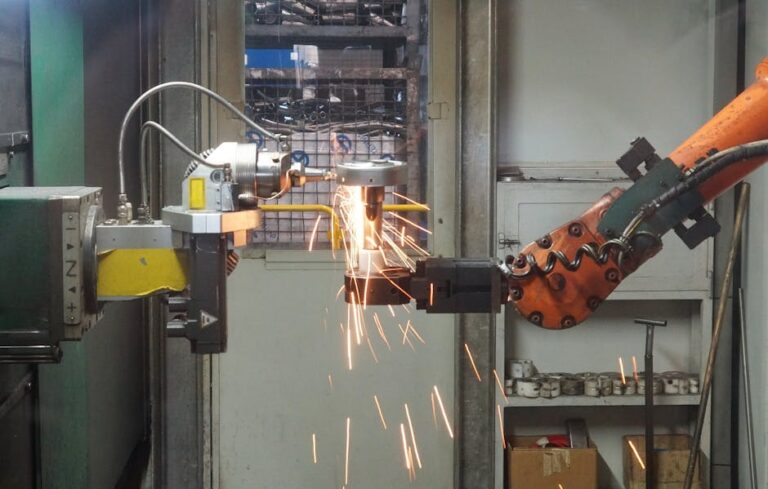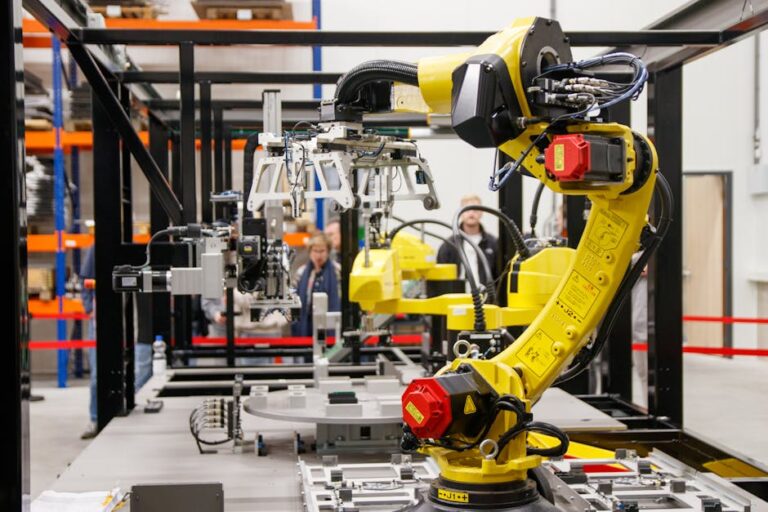
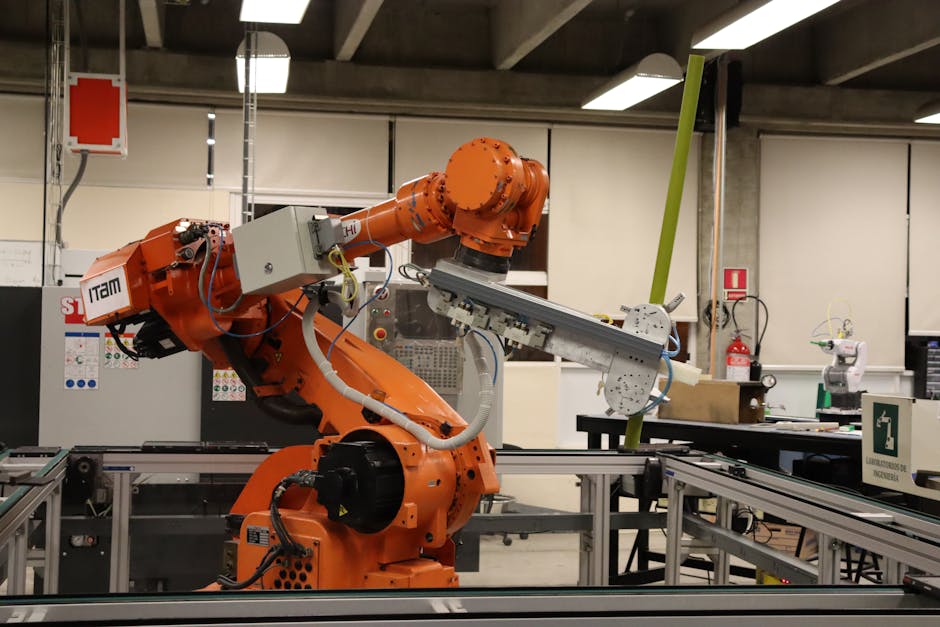
AI-powered inspection systems are transforming automated quality control China factories, enabling importers to achieve unprecedented quality consistency. Machine learning algorithms, computer vision, and robotic testing now replace traditional manual inspection methods. This 2026 guide examines how AI inspection technology benefits international buyers sourcing from China.
topchinasourcing partners with Chinese manufacturers who have invested in automated quality control China systems. Our supplier network on Alibaba and Global Sources includes factories with cutting-edge AI inspection capabilities. We coordinate with SGS and QIMA to validate automated inspection results.
Key Takeaways
- Detection Accuracy: AI systems achieve 99.5% defect detection versus 90% manual
- Processing Speed: Machine vision inspects 2000+ products per hour
- Cost Efficiency: Per-unit inspection costs drop 50-70% with automation
- 24/7 Operation: AI systems work continuously without fatigue
- Data Integration: Real-time quality metrics feed production optimization
1. Understanding AI Inspection Technology
Automated quality control China leverages multiple AI technologies to inspect products with superhuman accuracy and speed. Understanding these technologies helps you evaluate supplier capabilities.
1.1 Core AI Inspection Technologies
- Computer vision: Cameras capture images analyzed by neural networks for defect detection
- Deep learning: Algorithms trained on thousands of defect examples recognize patterns
- Edge computing: Processing happens on-site for real-time inspection decisions
- Multi-spectral imaging: Beyond visible light to detect invisible defects
- 3D scanning: Precise dimensional measurement and shape verification
1.2 How AI Differs from Traditional Inspection
| Factor | Traditional Manual | AI-Powered |
|---|---|---|
| Inspection Rate | 50-100 items/hour | 2000+ items/hour |
| Detection Accuracy | 85-90% | 99%+ |
| Consistency | Varies with fatigue | Constant |
| Operating Hours | 8-10 hours/day | 24/7 |
| Data Capture | Manual recording | Automatic digital |
2. Applications Across Product Categories
Automated quality control China implementations vary by product type and industry requirements.
2.1 Electronics and Components
- PCB inspection: Solder joint quality, component placement, trace continuity
- Display testing: Dead pixels, color accuracy, brightness uniformity
- Connector verification: Pin alignment, insertion force, contact quality
- Assembly checking: Component presence, orientation, labeling accuracy
Electronics manufacturers report 99.7% defect detection rates with AI systems, compared to 92% with manual inspection. The high-speed nature of electronics production makes AI inspection essential for maintaining quality.
2.2 Consumer Products
- Surface inspection: Scratches, blemishes, color variations, contamination
- Dimensional verification: Size accuracy, shape conformity, feature presence
- Assembly validation: Correct parts, proper orientation, complete assembly
- Packaging inspection: Label accuracy, seal integrity, damage detection
2.3 Textiles and Apparel
- Fabric inspection: Weave defects, color consistency, pattern alignment
- Construction quality: Seam strength, stitch consistency, hardware attachment
- Size verification: Measurement accuracy across production runs
3. Step-by-Step AI Inspection Implementation
Implementing automated quality control China with your suppliers requires careful planning and phased execution.
3.1 Step 1: Quality Baseline Assessment
Document current defect rates, inspection costs, and quality issues. Identify which defects cause the most problems and costs. This baseline provides comparison metrics for automation benefits. Assessment typically takes 1-2 weeks.
3.2 Step 2: Defect Classification and Prioritization
Categorize all defect types by severity and frequency. Prioritize which defects the AI system must detect. Create reference samples showing acceptable and defective products. This classification guides AI training requirements.
3.3 Step 3: Supplier Capability Evaluation
Assess which suppliers have AI inspection capabilities or can implement them. Request demonstrations of defect detection accuracy. Verify integration capabilities with your quality management systems. QIMA offers supplier capability assessments for automation readiness.
3.4 Step 4: Pilot Program Design
Select one product line for initial AI inspection implementation. Define success metrics including detection rate, false positive rate, and throughput. Plan parallel operation with manual inspection during validation. Pilot duration typically 4-8 weeks.
3.5 Step 5: System Training and Calibration
Provide sample products representing all defect types for AI training. Work with supplier to calibrate detection sensitivity. Validate accuracy against known defect samples. Training and calibration typically takes 2-3 weeks.
3.6 Step 6: Production Deployment and Monitoring
Deploy AI inspection in production environment. Monitor detection rates and false positives closely. Adjust parameters based on real-world performance. Establish ongoing calibration schedule to maintain accuracy.
4. ROI Analysis for AI Inspection
Quantifying benefits of automated quality control China helps justify implementation investment.
4.1 Cost Savings Breakdown
| Savings Category | Manual Cost | AI Cost | Annual Savings |
|---|---|---|---|
| Inspection Labor | $36,000/year | $12,000/year | $24,000 |
| Defect Returns | $18,000/year | $5,000/year | $13,000 |
| Rework Costs | $12,000/year | $3,000/year | $9,000 |
| Total Annual Savings | – | – | $46,000 |
5. Common Misconceptions About AI Inspection
Myth #1: AI Inspection Is Only for Large Orders
Reality: Many Chinese factories now offer AI inspection as standard service regardless of order size. The technology has become affordable and widespread. Small buyers benefit from the same quality consistency as large importers.
Myth #2: AI Cannot Match Human Judgment
Reality: AI systems trained on thousands of examples outperform human inspectors for consistent defect detection. While humans excel at novel situations, AI provides superior consistency for known defect types. Intertek studies show AI detects 15% more defects than trained inspectors.
Myth #3: AI Inspection Eliminates All Quality Problems
Reality: AI inspection detects defects but doesn’t prevent root causes. Combine AI detection with process improvement and supplier development for comprehensive quality management. Use AI data to identify and address systematic issues.
Myth #4: AI Systems Are Too Complex to Implement
Reality: Modern AI inspection systems are designed for production floor use. Supplier technicians can operate systems after brief training. Cloud-based systems simplify deployment and maintenance. Most implementations take 4-8 weeks.
Myth #5: AI Inspection Is Expensive
Reality: AI inspection costs have dropped 60% since 2020. Per-unit costs of $0.05-0.15 compare favorably to $0.15-0.50 for manual inspection. ROI typically achieved within 6-12 months through reduced defects and inspection costs.
6. Integration with Quality Management
Automated quality control China delivers maximum value when integrated with broader quality management systems.
6.1 Data Integration Benefits
- Real-time dashboards: Monitor quality metrics from anywhere in the world
- Trend analysis: Identify quality patterns before they become problems
- Root cause investigation: Trace defects back to production parameters
- Supplier scorecards: Objective quality performance measurement
- Compliance documentation: Automated quality records for audits
6.2 Platform Integration Options
- ERP systems: Quality data feeds inventory and production planning
- QMS platforms: Integration with Inspectorio and similar quality management tools
- Supplier portals: Real-time quality visibility for buyers and suppliers
- Blockchain records: Immutable quality documentation for traceability
7. Future Developments in AI Inspection
The evolution of automated quality control China continues with advancing AI capabilities that will further transform quality management in manufacturing.
7.1 Emerging Capabilities
- Predictive quality: AI predicts defects before production based on parameters
- Self-learning systems: AI improves detection through continuous feedback
- Cross-factory learning: Knowledge sharing between production facilities
- Augmented reality: Human-AI collaboration for complex inspections
- Natural language queries: Ask questions about quality data conversationally
7.2 Industry Adoption Trends
Industry analysts predict 80% of Chinese export manufacturers will implement AI inspection by 2029. Early adopters gain competitive advantages in quality consistency and cost efficiency. The technology continues to improve as AI algorithms become more sophisticated and hardware costs decrease.
7.3 Preparing for Future Advances
To prepare for advancing AI inspection capabilities, establish data collection systems now. Quality data from current inspections trains future AI systems. Build relationships with technology-forward suppliers who invest in continuous improvement. Stay informed about emerging capabilities through industry publications and trade shows.
Companies that establish AI inspection partnerships today will be best positioned to leverage future advances. The gap between AI-equipped and traditional factories will widen as technology improves.
8. Working with topchinasourcing
topchinasourcing provides access to automated quality control China capabilities through our vetted supplier network and quality management expertise.
8.1 Our AI Inspection Services
- Supplier matching: Connect with factories using advanced AI inspection systems
- Capability verification: Confirm AI systems deliver promised accuracy rates
- Integration support: Connect AI data with your quality management systems
- Performance monitoring: Track AI inspection effectiveness over time continuously
- Continuous optimization: Improve AI parameters for your specific product requirements
Our clients sourcing from AI-equipped factories achieve 50% reduction in defect rates and 40% lower quality-related costs. We maintain relationships with manufacturers across electronics, consumer goods, and industrial products who have invested in AI inspection technology. Our team stays current with the latest AI inspection advances to ensure clients benefit from cutting-edge quality capabilities and maximum value from their China sourcing investments and operations effectively, consistently, and reliably every single time for their businesses and customers.
For more information on quality control measures and supplier verification, explore our comprehensive guides. These resources provide additional helpful context for building effective quality management systems that leverage both AI and traditional inspection methods for optimal results, performance, value, and long-term sourcing success for your business.
Ready to Get Started?
Partner with topchinasourcing to leverage automated quality control China for your products. Our team provides comprehensive support from supplier identification through ongoing quality monitoring. Contact us today for a free consultation on AI inspection solutions.