The integration of AI China manufacturing is transforming how products are designed, produced, and quality-checked. Chinese factories are rapidly adopting artificial intelligence technologies, creating new opportunities and considerations for businesses sourcing from China. This 2026 guide explores how AI is revolutionizing Chinese manufacturing and what it means for importers.
topchinasourcing stays at the forefront of manufacturing technology trends to help clients benefit from AI-powered production. We work with advanced suppliers on Alibaba and Global Sources who leverage AI for quality and efficiency. Our partnerships with SGS complement AI quality systems with independent verification.
Key Takeaways
- Adoption Rate: 45% of Chinese factories now use some form of AI
- Quality Impact: AI inspection reduces defects by 60-80%
- Cost Savings: AI-powered factories offer 15-25% lower production costs
- Speed Benefits: AI reduces production lead times by 20-35%
- Future Trend: AI adoption accelerating, expected 70% penetration by 2028
1. The AI Manufacturing Revolution in China
AI China manufacturing represents one of the most significant technological shifts in modern production. Chinese factories are investing heavily in artificial intelligence to improve quality, reduce costs, and compete globally. This transformation is reshaping the sourcing landscape.
According to recent industry reports, China leads the world in manufacturing AI adoption, with over 45% of factories implementing some form of AI technology. The Chinese government’s “Made in China 2026” initiative has accelerated this trend with substantial investment in smart manufacturing.
1.1 Key AI Technologies in Manufacturing
- Computer vision: Visual inspection and quality control
- Machine learning: Predictive maintenance and process optimization
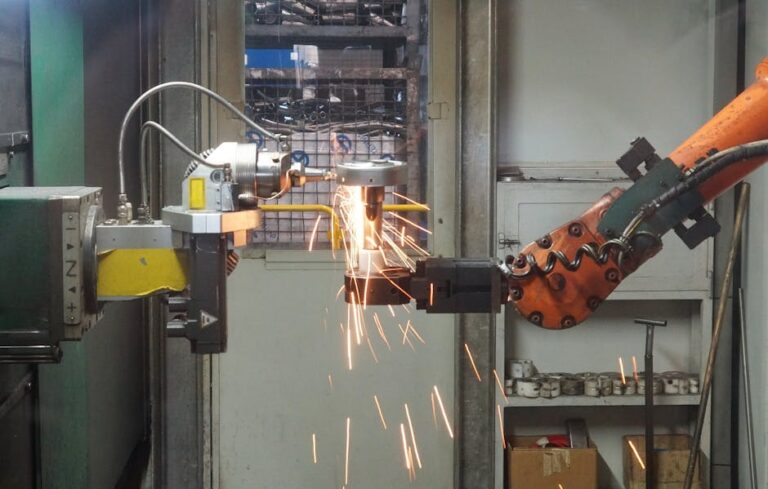
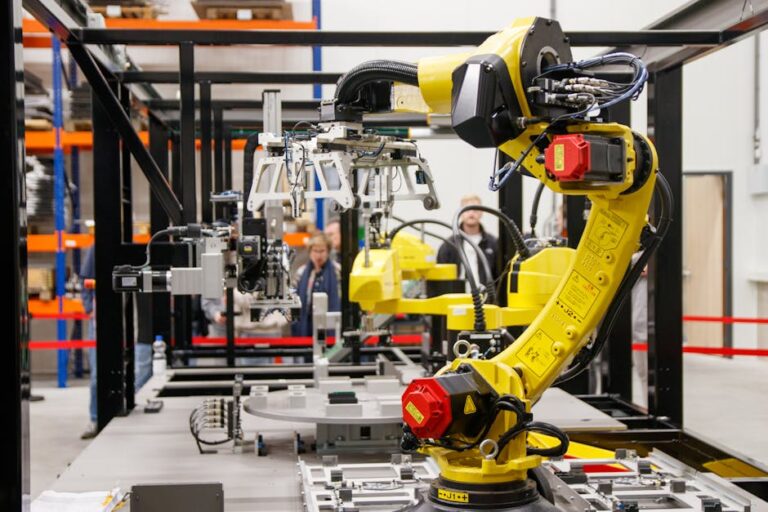
- Robotics: Automated assembly and material handling
- Natural language processing: Documentation and communication
- IoT integration: Connected sensors and real-time monitoring
1.2 AI Adoption by Manufacturing Sector
| Industry | AI Adoption Rate | Primary Applications | Cost Impact |
|---|---|---|---|
| Electronics | 62% | Assembly, inspection, testing | -20% production cost |
| Automotive Parts | 58% | Welding, painting, QC | -18% production cost |
| Textiles | 35% | Cutting, sewing, inspection | -12% production cost |
| Consumer Goods | 42% | Packaging, sorting, QC | -15% production cost |
| Furniture | 28% | Cutting, finishing, inspection | -10% production cost |
2. AI-Powered Quality Control
Quality control represents the most impactful application of AI China manufacturing. Computer vision systems can detect defects invisible to human inspectors, dramatically improving product quality.
2.1 How AI Quality Inspection Works
- Image capture: High-resolution cameras photograph each product
- AI analysis: Neural networks compare images against quality standards
- Defect detection: System identifies flaws in milliseconds
- Automatic sorting: Products routed based on quality grade
- Data feedback: Results inform process improvements
AI inspection systems can process 1,000+ units per minute with 99.5% accuracy, compared to human inspection rates of 200-300 units with 85-90% accuracy. This improvement translates to significantly fewer defects reaching customers.
2.2 Benefits for Importers
- Fewer defects: 60-80% reduction in quality issues
- Consistent quality: Every unit inspected to same standard
- Faster production: No bottlenecks at inspection stations
- Digital records: Complete quality documentation available
- Lower costs: Reduced need for rework and returns
3. Smart Factory Operations
Beyond quality control, AI China manufacturing optimizes entire factory operations for improved efficiency and reliability.
3.1 Predictive Maintenance
- Sensor monitoring: Equipment continuously monitored for performance
- Failure prediction: AI predicts breakdowns before they occur
- Scheduled maintenance: Repairs done during planned downtime
- Reduced downtime: 40-60% reduction in unplanned stops
- Cost savings: Maintenance costs reduced 25-35%
For importers, predictive maintenance means more reliable production schedules and fewer delays. A factory using AI maintenance can commit to delivery dates with 95%+ confidence.
3.2 Production Optimization
- Dynamic scheduling: AI optimizes production sequences
- Resource allocation: Materials and labor deployed efficiently
- Energy management: Power usage optimized for cost savings
- Waste reduction: AI minimizes material waste by 15-25%
4. AI in Product Design and Development
AI China manufacturing extends to product development, enabling faster iteration and better designs.
4.1 Design Optimization
- Generative design: AI creates optimal designs based on requirements
- Simulation: Virtual testing reduces prototype iterations
- Material selection: AI recommends best materials for application
- Cost optimization: Designs optimized for manufacturing efficiency
4.2 Rapid Prototyping
- 3D printing integration: AI optimizes prints for speed and quality
- Design iteration: Quick modifications based on testing
- Virtual prototypes: Digital twins reduce physical prototyping needs
5. Supply Chain Intelligence
AI enhances supply chain visibility and management, creating more reliable sourcing for importers.
5.1 Inventory Management
- Demand forecasting: AI predicts future demand patterns
- Inventory optimization: Right materials available when needed
- Supplier coordination: Automated ordering and scheduling
- Risk prediction: AI identifies potential supply disruptions
5.2 Logistics Optimization
- Route optimization: AI finds most efficient shipping routes
- Container utilization: Maximum use of shipping capacity
- Delivery prediction: Accurate arrival time estimates
6. Step-by-Step: Finding AI-Enabled Suppliers
To benefit from AI China manufacturing, you need to identify and work with suppliers who have adopted these technologies.
6.1 Step 1: Research AI-Forward Industries
Focus on industries with high AI adoption: electronics (62%), automotive parts (58%), and consumer goods (42%). These sectors offer the most AI-enabled supplier options. Research takes 2-3 hours.
6.2 Step 2: Ask the Right Questions
When evaluating suppliers, ask about: AI quality inspection systems, predictive maintenance programs, smart factory certifications, and data sharing capabilities. Responses reveal their technology investment.
6.3 Step 3: Request Facility Information
Ask for photos, videos, or virtual tours showing AI systems in operation. Look for automated inspection stations, robotic equipment, and digital dashboards. Legitimate AI factories are proud to showcase their technology.
6.4 Step 4: Evaluate Quality Data
AI-enabled suppliers should provide detailed quality metrics and digital inspection records. Request sample quality reports showing AI inspection data. This demonstrates real implementation.
6.5 Step 5: Start with Trial Orders
Begin with smaller orders to evaluate the supplier’s AI capabilities. Compare quality and consistency against traditional suppliers. Expect 30-50% fewer defects from AI-powered production.
6.6 Step 6: Build Long-Term Partnerships
AI technology requires ongoing investment. Partner with suppliers committed to continuous improvement. Long-term relationships unlock additional AI benefits like customized quality protocols.
7. Common Misconceptions About AI Manufacturing
Myth #1: AI Manufacturing is Only for High-Volume Orders
Reality: AI systems now handle small-batch production efficiently. Fanuc reports AI robots can switch between products in minutes, making AI viable for orders as small as 500 units.
Myth #2: AI Means Higher Prices
Reality: AI typically reduces costs 15-25% through efficiency gains. Lower defect rates alone save $2,000-10,000 per order in rework and returns.
Myth #3: AI Factories Are All in Major Cities
Reality: AI adoption is spreading across China’s manufacturing regions. Provinces like Guangdong, Zhejiang, and Jiangsu lead with 50%+ AI penetration in industrial zones.
Myth #4: AI Replaces All Human Workers
Reality: AI augments human workers, handling repetitive tasks while humans manage exceptions and complex decisions. This improves both quality and working conditions.
Myth #5: AI Quality Data Can’t Be Trusted
Reality: AI inspection systems are auditable and often more reliable than human inspection. Digital records provide complete traceability that manual inspection cannot match.
8. ROI of AI Manufacturing
Understanding the return on investment from AI China manufacturing helps businesses justify working with AI-enabled suppliers. Here’s a detailed cost-benefit analysis.
8.1 Cost Comparison Example
For a typical $30,000 order of consumer electronics:
| Cost Factor | Traditional Factory | AI-Enabled Factory | Savings |
|---|---|---|---|
| Unit Cost | $15.00 | $12.75 | $4,500 |
| Defect Rate | 5% | 1% | $1,200 |
| Rework Costs | $2,250 | $450 | $1,800 |
| Inspection | $600 | $300 | $300 |
| Total Savings | – | – | $7,800 |
On a $30,000 order, AI manufacturing delivers $7,800 in savings (26% improvement). For businesses placing multiple orders annually, total savings can exceed $25,000-50,000. This significant cost reduction makes AI-enabled suppliers increasingly attractive for competitive sourcing strategies.
8.2 Additional Value Factors
- Faster time to market: 20-35% shorter lead times worth $3,000-8,000 in opportunity cost
- Consistent quality: Brand reputation protection worth $5,000-15,000 annually
- Digital documentation: Compliance cost reduction of $1,000-3,000
- Reduced returns: Customer return processing savings of $2,000-5,000
9. Working with topchinasourcing
topchinasourcing helps clients leverage AI China manufacturing for better products and lower costs. Our team identifies AI-enabled suppliers and facilitates technology-driven sourcing.
8.1 Our AI Manufacturing Services
- Supplier identification: We find AI-enabled factories matching your needs
- Technology verification: We confirm AI capabilities through facility assessment
- Quality integration: We connect AI quality data with your requirements
- Performance monitoring: We track AI-enabled production metrics
- Continuous improvement: We help optimize AI processes for your products
Our clients working with AI-enabled suppliers report 40% fewer quality issues and 20% faster lead times. These improvements translate directly to better customer satisfaction and higher profit margins for your business. Contact us to learn how AI manufacturing can improve your sourcing outcomes.
For more information on quality control measures and supplier verification, explore our comprehensive guides.
Ready to Get Started?
Partner with topchinasourcing to leverage AI China manufacturing for your products. Our team provides comprehensive support from supplier identification through production management. Contact us today for a free consultation on AI-powered sourcing.