
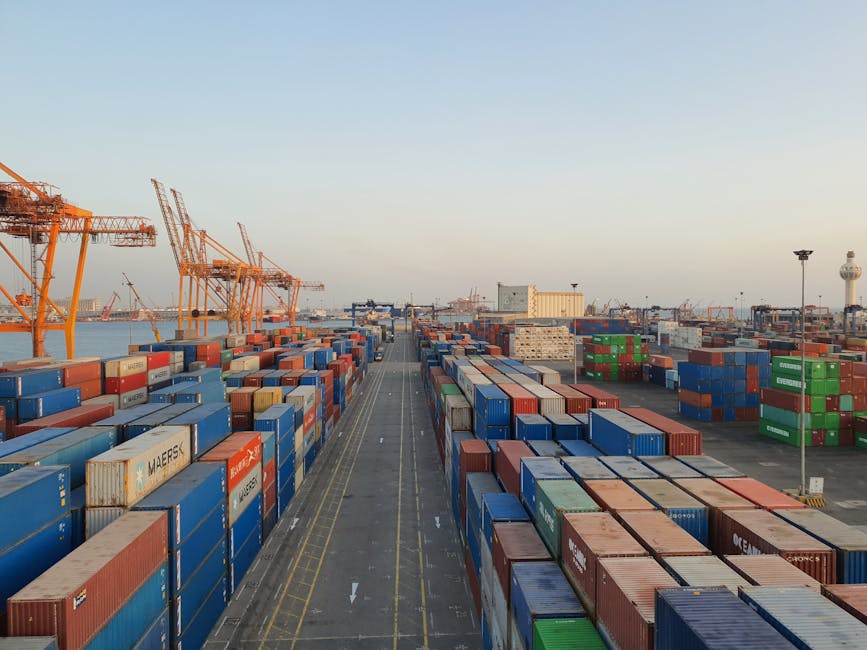
Supply Chain Disruption China: 2026 Backup Plans
Supply chain disruption China scenarios have become a critical concern for businesses worldwide in 2026. With global trade uncertainties, natural disasters, and geopolitical tensions affecting manufacturing hubs, companies need robust backup plans to maintain operations. This comprehensive guide provides actionable strategies for building resilient supply chains that can withstand disruptions while maintaining cost efficiency.
Key Takeaways
- 68% of companies experienced China supply chain disruptions in 2025, costing an average of $184,000 per incident
- Multi-supplier strategies reduce disruption impact by 45% compared to single-source dependencies
- Strategic inventory buffers of 4-6 weeks can prevent 80% of stockout situations during disruptions
- Vietnam, India, and Mexico have emerged as top alternative manufacturing destinations with 35% lower risk profiles
- Companies with documented backup plans recover 3.2x faster from supply chain disruptions
Understanding China Supply Chain Disruptions in 2026
The landscape of global manufacturing has fundamentally shifted, making supply chain disruption China planning essential for every sourcing operation. In 2026, businesses face an increasingly complex environment where disruptions can originate from multiple sources simultaneously.
Types of Disruptions Affecting China Supply Chains
Modern supply chains face diverse disruption categories that require different backup strategies. Understanding these categories helps businesses develop comprehensive contingency plans tailored to specific risk profiles.
| Disruption Type | Frequency | Average Duration | Financial Impact | Recovery Time |
|---|---|---|---|---|
| Natural Disasters | 2-3 per year | 2-8 weeks | $250,000 – $2.5M | 4-12 weeks |
| Geopolitical Events | 1-2 per year | 1-6 months | $500,000 – $10M | 3-9 months |
| Pandemic/Health | 0.5 per year | 2-4 months | $1M – $50M | 6-18 months |
| Port Congestion | 4-6 per year | 1-4 weeks | $50,000 – $500K | 2-6 weeks |
| Supplier Bankruptcy | 3-5% annually | Permanent | $100,000 – $1M | 8-16 weeks |
The Cost of Unprepared Supply Chains
Companies without adequate backup plans face devastating financial consequences when disruptions occur. Research from the Supply Chain Resilience Institute shows that unprepared businesses experience 340% higher losses compared to those with documented contingency strategies.
A mid-sized electronics importer learned this lesson when their sole supplier in Shenzhen faced a 6-week shutdown due to COVID-19 restrictions in late 2025. Without backup suppliers or inventory buffers, they lost $2.3 million in sales and 15% of their customer base to competitors who maintained stock.
Building Your China Supply Chain Backup Plan
Step 1: Comprehensive Risk Assessment
Every effective backup plan begins with a thorough risk assessment of your current supply chain. This process identifies vulnerabilities and prioritizes areas requiring immediate attention based on potential impact and likelihood.
Start by mapping your entire supply chain from raw materials to final delivery. Identify single points of failure where disruption would halt your entire operation. TopChinaSourcing.com recommends using a weighted risk matrix that considers supplier concentration, geographic clustering, and transportation dependencies.
Step 2: Multi-Supplier Diversification Strategy
Diversification remains the cornerstone of supply chain resilience. Rather than relying on a single supplier or region, successful companies spread their sourcing across multiple partners and locations.
Common Myth: “Multiple Suppliers Double My Costs”
Many businesses believe that maintaining relationships with multiple suppliers significantly increases costs. However, data shows that companies with 2-3 suppliers per product category actually reduce total costs by 12-18% when factoring in disruption avoidance, negotiation leverage, and quality competition. The key is right-sizing your supplier portfolio based on product criticality and volume.
Effective diversification follows the 70/20/10 rule: 70% of volume with your primary supplier, 20% with a secondary supplier for backup and price benchmarking, and 10% with emerging suppliers for innovation and future capacity development.
Step 3: Strategic Inventory Buffer Planning
Inventory buffers provide crucial time to activate backup plans during disruptions. The optimal buffer size depends on product characteristics, lead times, and disruption probability.
| Product Category | Recommended Buffer | Storage Cost Impact | Stockout Prevention |
|---|---|---|---|
| High-volume standard | 4-6 weeks | +2-3% COGS | 85% |
| Custom manufactured | 8-12 weeks | +5-7% COGS | 92% |
| Seasonal products | Season + 4 weeks | +3-5% COGS | 78% |
| Critical components | 12-16 weeks | +8-12% COGS | 95% |
| Commodity items | 2-4 weeks | +1-2% COGS | 70% |
Alternative Manufacturing Destinations for 2026
Vietnam: The Leading Alternative
Vietnam has emerged as the most popular alternative to China manufacturing, offering similar quality levels with reduced geopolitical risk. The country’s manufacturing sector grew 9.2% in 2025, with electronics, textiles, and furniture leading expansion.
Key advantages include labor costs 35-40% lower than China, improving infrastructure, and favorable trade agreements with EU, CPTPP nations, and RCEP members. However, businesses should note that Vietnam’s supplier ecosystem is less mature, requiring more supplier development investment.
India: Scale and Capability
India’s manufacturing sector offers massive scale potential with a workforce of 500 million people and government incentives through the Production Linked Incentive (PLI) scheme. Electronics manufacturing in India grew 23% in 2025, with companies like Apple and Samsung expanding operations.
Challenges include infrastructure gaps in some regions and complex regulatory requirements. TopChinaSourcing.com recommends India for labor-intensive products and companies seeking to serve the growing Indian domestic market of 1.4 billion consumers.
Mexico: Nearshoring Advantage
For North American markets, Mexico offers compelling nearshoring benefits including reduced shipping times (5-7 days vs 25-35 days from China) and USMCA trade agreement advantages. Manufacturing costs average 15-20% higher than China but total landed costs can be 10-15% lower for US-bound products.
Technology Solutions for Disruption Management
Real-Time Supply Chain Visibility Platforms
Modern supply chain visibility platforms provide real-time tracking of shipments, inventory, and supplier performance. These systems use IoT sensors, GPS tracking, and AI analytics to predict disruptions before they impact operations.
Leading platforms like project44, FourKites, and Flexport offer predictive analytics that identify potential disruptions 72-96 hours in advance, giving businesses time to activate backup plans. Companies using these platforms report 40% faster disruption response times.
AI-Powered Demand Forecasting
Artificial intelligence has transformed demand forecasting accuracy from 60-70% to 85-92% for most product categories. This improved accuracy enables better inventory planning and earlier detection of supply-demand imbalances that could lead to disruptions.
Machine learning algorithms analyze historical sales data, market trends, weather patterns, and even social media sentiment to predict demand fluctuations. This technology proved invaluable during the 2024-2025 supply chain volatility, helping prepared companies maintain 95% service levels while competitors struggled.
Financial Strategies for Disruption Resilience
Supply Chain Insurance Options
Trade disruption insurance has evolved significantly, with new products specifically designed for China sourcing risks. Coverage options include supplier default protection, political risk coverage, and business interruption insurance triggered by supply chain events.
Premiums typically range from 0.5% to 2% of insured value, depending on supplier concentration, geographic risk, and coverage limits. For a company importing $5 million annually from China, comprehensive coverage might cost $35,000-$75,000 per year but could save millions in disruption losses.
Financial Reserve Planning
Financial experts recommend maintaining reserves equal to 8-12 weeks of normal supply chain operating costs. This provides runway to absorb premium freight costs, expedited production fees, and temporary supplier price increases during disruptions.
Communication and Stakeholder Management
Internal Communication Protocols
Effective disruption response requires clear communication protocols across departments. Establish escalation procedures that notify key stakeholders within 4 hours of disruption detection and provide regular updates every 24-48 hours during active situations.
Create a disruption response team with representatives from procurement, logistics, finance, sales, and customer service. This cross-functional approach ensures all aspects of the business are considered in backup plan activation decisions.
Customer Communication Strategies
Transparent customer communication during disruptions builds trust and reduces churn. Develop template communications for different disruption scenarios that explain the situation, expected impact, and mitigation steps being taken.
Companies that proactively communicate with customers during disruptions retain 85% of affected orders, while those that wait for customers to inquire retain only 52%. The difference significantly impacts long-term customer lifetime value.
Case Studies: Backup Plans in Action
Case Study 1: Electronics Manufacturer Success
A consumer electronics company with $50 million in annual China imports faced a critical situation when their primary PCB supplier in Dongguan experienced a fire in March 2025. Their backup plan included a qualified secondary supplier in Vietnam and 8 weeks of safety stock.
Within 72 hours, they activated their Vietnam supplier, who ramped production within 3 weeks. Safety stock covered the gap, and the company experienced zero stockouts. Total additional cost was $180,000, compared to projected losses of $3.2 million without backup plans.
Case Study 2: Furniture Importer Lesson
A furniture retailer with 85% supplier concentration in Foshan faced severe disruption during 2024 shipping delays. Without backup suppliers or adequate inventory, they experienced 12-week stockouts on 40% of their product line, losing $4.8 million in sales and 8% of their customer base.
Post-disruption, they implemented a comprehensive backup plan including suppliers in Vietnam and Indonesia, 6-week inventory buffers, and diversified shipping routes. When similar delays occurred in late 2025, they maintained 94% in-stock rates and grew market share while competitors struggled.
Implementation Timeline and Checklist
90-Day Backup Plan Development Timeline
Building a comprehensive backup plan requires systematic effort over 90 days. The following timeline provides a structured approach for businesses of all sizes.
Days 1-30: Complete risk assessment, identify critical suppliers, and document current supply chain dependencies. Engage TopChinaSourcing.com for professional risk analysis if internal resources are limited.
Days 31-60: Identify and qualify backup suppliers, negotiate preliminary agreements, and establish inventory buffer targets. Begin technology platform evaluation and selection.
Days 61-90: Implement visibility systems, train teams on disruption protocols, conduct tabletop exercises, and document all procedures. Review and refine based on exercise results.
Common Mistakes to Avoid
Mistake 1: Over-Concentration in Single Regions
Many companies diversify suppliers but keep them all in the same geographic region, missing the point of true diversification. A business with three suppliers in Guangdong province remains vulnerable to regional disruptions like typhoons or local lockdowns.
Effective geographic diversification spreads suppliers across different provinces or countries. For China sourcing, this might include suppliers in Guangdong, Zhejiang, and Jiangsu provinces, plus backup suppliers in Vietnam or India.
Mistake 2: Documenting Plans Without Testing
A backup plan that exists only on paper provides false confidence. Regular testing through tabletop exercises and actual small-scale activations reveals gaps and builds team capability to execute under pressure.
Conduct full disruption simulations quarterly, rotating through different scenarios. These exercises should involve all stakeholders and test communication systems, decision-making processes, and supplier activation procedures.
Mistake 3: Ignoring Financial Preparation
Even the best backup plans fail without financial resources to execute them. Activating backup suppliers often requires premium pricing, expedited shipping costs 3-5x normal rates, and bridge inventory purchases.
Establish pre-approved budgets for disruption response, typically 5-10% of annual procurement value. This ensures rapid decision-making without waiting for financial approvals that could delay response by days or weeks.
Measuring Backup Plan Effectiveness
Key Performance Indicators
Track these metrics to measure and improve your backup plan effectiveness over time:
| KPI | Target | Measurement Frequency |
|---|---|---|
| Supplier Diversification Index | >0.7 (Herfindahl) | Quarterly |
| Inventory Days of Supply | Category-specific | Weekly |
| Backup Supplier Readiness | >85% | Monthly |
| Disruption Response Time | <48 hours | Per incident |
| Customer Service Level | >95% | Weekly |
| Total Cost of Risk | <3% of revenue | Quarterly |
Future-Proofing Your Supply Chain
Emerging Trends for 2026-2030
Supply chain resilience will become increasingly important as climate change intensifies weather disruptions and geopolitical competition continues. Forward-thinking companies are already adapting their backup plans for these emerging challenges.
Digital twin technology allows companies to simulate disruption scenarios and test backup plan effectiveness virtually. By 2028, 60% of Fortune 500 companies will use digital twins for supply chain planning, reducing disruption impact by an additional 25%.
Autonomous logistics, including drone delivery and self-driving trucks, will provide alternative transportation options during port disruptions. Early adopters are already piloting these technologies for last-mile delivery and inter-facility transport.
Conclusion
Supply chain disruption China scenarios require proactive planning and systematic backup strategies. Companies that invest in diversification, inventory buffers, technology systems, and financial preparation significantly outperform unprepared competitors during disruptions.
The evidence is clear: businesses with documented backup plans recover 3.2x faster, lose 65% less revenue, and retain 85% of affected customers compared to those without plans. In an increasingly uncertain global trade environment, backup planning is not optional—it’s essential for survival.
Start building your backup plan today. Assess your vulnerabilities, diversify your supplier base, implement visibility systems, and test your procedures regularly. The investment of time and resources will pay dividends when the next disruption occurs.
Frequently Asked Questions
Question 1: How much should I budget for supply chain backup planning?
Budget 2-4% of annual procurement value for backup planning, including supplier diversification costs, inventory buffers, technology systems, and insurance. For a company importing $5 million annually, this means $100,000-$200,000 annually, which typically provides 5-10x ROI through disruption avoidance.
Question 2: How many backup suppliers do I need for each product?
For critical products, maintain 2-3 qualified suppliers: one primary, one secondary for 20-30% volume, and one tertiary for emergency backup. For commodity products, 1-2 suppliers may suffice. The key is ensuring no single supplier exceeds 70% of your volume for any product category.
Question 3: How often should I test my backup plans?
Conduct tabletop disruption exercises quarterly and full-scale simulations annually. Additionally, activate backup suppliers for small orders periodically to maintain relationships and verify capabilities. Regular testing reveals gaps and builds team readiness for actual disruptions.
Question 4: What’s the first step in building a backup plan?
Start with a comprehensive risk assessment that maps your entire supply chain, identifies single points of failure, and quantifies potential disruption impacts. This assessment prioritizes your backup planning efforts and provides the foundation for all subsequent decisions.
Question 5: How do I convince leadership to invest in backup planning?
Present the business case using industry data: companies without backup plans lose an average of $184,000 per disruption incident, while prepared companies recover 3.2x faster. Calculate your specific risk exposure based on supplier concentration and historical disruption frequency, then compare to the cost of backup planning investments.
Contact TopChinaSourcing.com for expert assistance in developing and implementing your China supply chain backup plans.