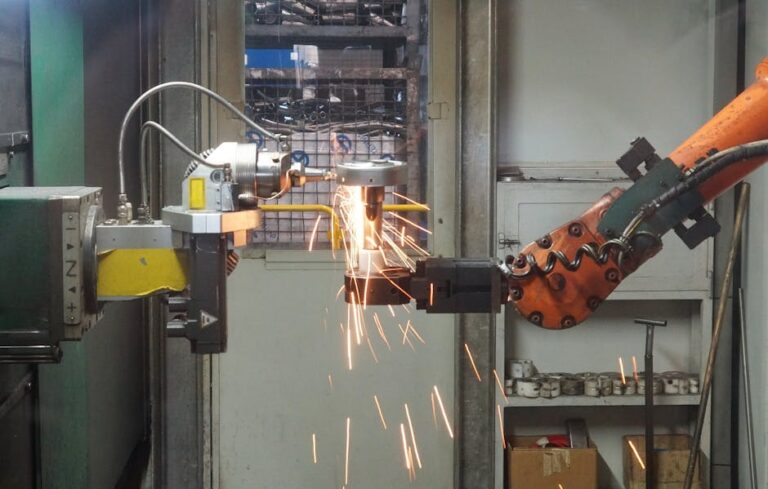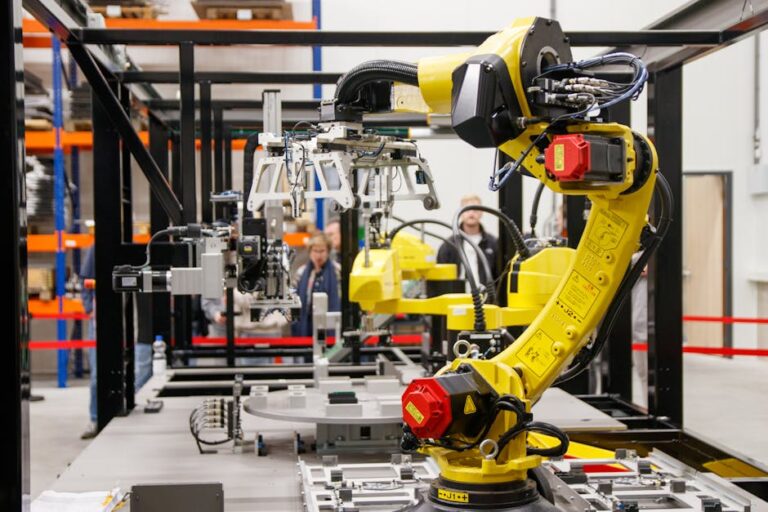
The automotive industry’s global supply chain increasingly relies on Chinese manufacturing for quality components at competitive costs. Automotive parts China sourcing has matured significantly over the past decade, with many manufacturers now holding international certifications and supplying major OEMs worldwide. This comprehensive 2026 guide covers certification requirements, quality standards, and best practices for sourcing automotive components from Chinese suppliers effectively.
Key Takeaways
- Market Scale: China produces $50+ billion in automotive parts annually, exporting to global OEMs and aftermarket
- Certification Requirements: IATF 16949, ISO 14001, and market-specific approvals (E-mark, DOT, SAE) are essential
- Quality Systems: PPAP, APQP, and statistical process control required for OEM supply
- Manufacturing Hubs: Shanghai, Guangdong, Jiangsu, and Zhejiang provinces host major automotive clusters
- Testing Investment: Budget 3-5% of order value for validation and ongoing quality testing
1. Automotive Parts Industry Overview
The automotive parts China industry has evolved from basic manufacturing to sophisticated production meeting global OEM standards.
1.1 Industry Transformation
Chinese automotive manufacturing has undergone remarkable development:
- 2000-2010: Focus on aftermarket and low-cost components, limited OEM supply
- 2011-2018: Quality system implementation, OEM qualification, export growth
- 2019-2026: EV component leadership, advanced manufacturing, global OEM partnerships
Today, Chinese suppliers serve virtually every major automotive manufacturer globally, including both traditional OEMs and emerging electric vehicle manufacturers seeking competitive and reliable sourcing solutions.
1.2 Product Categories
| Category | Examples | Key Requirements | Typical Margin |
|---|---|---|---|
| Powertrain | Engine parts, transmissions, EV motors | IATF 16949, PPAP | 15-25% |
| Chassis | Suspension, brakes, steering | E-mark, DOT approval | 20-30% |
| Body Parts | Panels, mirrors, glass | OEM specifications | 25-40% |
| Electrical | Sensors, wiring, lighting | E-mark, CE, UL | 20-35% |
| Interior | Seats, trim, dashboard | Flammability standards | 25-35% |
2. Certification Requirements
Certifications are essential for automotive parts China market access and OEM qualification.
2.1 Quality Management Certifications
- IATF 16949: Automotive quality management standard, mandatory for OEM supply
- ISO 9001: Foundation quality certification, minimum requirement
- ISO 14001: Environmental management, increasingly required by OEMs
- ISO 45001: Occupational health and safety management
2.2 Product Certifications by Market
European Union:
- E-mark (ECE): Required for safety-related components (lighting, glass, brakes)
- CE marking: For certain electrical and electronic components
- REACH compliance: Chemical substance regulations
United States:
- DOT approval: Required for lighting, glass, tires, and safety equipment
- SAE standards: Industry technical specifications
- FMVSS compliance: Federal Motor Vehicle Safety Standards
Other Markets:
- China CCC: Chinese compulsory certification for domestic market
- JIS/JASO: Japanese automotive standards
- ADR: Australian Design Rules
3. Manufacturing Clusters
Understanding regional specializations optimizes automotive parts China sourcing strategies.
3.1 Shanghai and Jiangsu
- Specialization: OEM components, precision parts, EV powertrains
- Key advantages: Major OEM presence, skilled workforce, port access
- Major customers: Tesla, VW, GM, domestic OEMs
3.2 Guangdong Province
- Specialization: Electronics, EV components, lighting systems
- Key advantages: Electronics supply chain, innovation ecosystem
- Major customers: BYD, Toyota, Honda, export markets
3.3 Zhejiang Province
- Specialization: Aftermarket parts, motorcycle components, accessories
- Key advantages: Competitive pricing, flexible production, export infrastructure
- Major customers: Aftermarket distributors, online retailers
4. Supplier Selection and Qualification
Rigorous supplier qualification is essential for automotive parts China sourcing success.
4.1 Supplier Qualification Checklist
- IATF 16949 certification: Verify current certificate with registrar
- OEM references: Confirm supply relationships with major manufacturers
- Production capability: Assess capacity, equipment, workforce skills
- Quality systems: Review PPAP capability, testing equipment, SPC implementation
- Financial stability: Verify business viability for long-term partnership
4.2 Step-by-Step Supplier Qualification
Step 1: Document Verification
Request and verify IATF certificate, business license, export license, and customer references. Confirm certifications are current with issuing bodies.
Step 2: Initial Assessment
Conduct desktop review of capabilities, request capability presentation, and review quality documentation.
Step 3: On-Site Audit
Visit facility to assess production capability, quality systems, and management commitment. Use VDA 6.3 or AIAG audit methodology.
Step 4: Sample Production
Request PPAP samples including all required documentation: control plan, FMEA, measurement studies, material certifications.
Step 5: Validation Testing
Submit samples to accredited laboratory for validation testing per applicable standards and specifications.
5. Quality Assurance Systems
Automotive quality requires systematic approaches to automotive parts China quality management.
5.1 PPAP Requirements
Production Part Approval Process documentation includes:
- Design records: Drawings, specifications, CAD files
- Engineering change documents: Approved modifications
- Design FMEA: Failure mode analysis for design
- Process flow diagram: Manufacturing sequence
- Process FMEA: Failure mode analysis for process
- Control plan: Quality control methodology
- MSA studies: Measurement system analysis
- Dimensional results: Inspection reports
- Material test results: Material certifications and testing
- Initial process studies: Capability data (Cpk)
5.2 Statistical Process Control
- Control charts: Monitor critical characteristics during production
- Cpk requirements: Minimum 1.33 for critical characteristics
- Reaction plans: Defined responses to out-of-control conditions
- Continuous improvement: Regular process optimization
5.3 Advanced Product Quality Planning (APQP)
APQP provides a structured approach to product development:
- Phase 1 – Plan and Define: Customer requirements, design goals, reliability targets
- Phase 2 – Product Design: Design verification, prototype testing, design reviews
- Phase 3 – Process Design: Manufacturing process development, tooling, capacity planning
- Phase 4 – Product and Process Validation: Production trial runs, PPAP submission
- Phase 5 – Production: Continuous improvement, customer feedback, quality monitoring
Require suppliers to follow APQP methodology for new product development.
5.4 Supplier Quality Development
Invest in supplier development for long-term automotive parts China success:
- Training programs: Quality tools, problem-solving methodologies
- Joint improvement projects: Cost reduction, quality enhancement initiatives
- Regular reviews: Quarterly business reviews, performance scorecards
- Technical support: Engineering assistance for complex components
6. Testing and Validation
Comprehensive testing validates automotive parts China quality and compliance.
6.1 Testing Categories
| Test Type | Purpose | Cost Range |
|---|---|---|
| Dimensional | Verify conformance to specifications | $200-500 |
| Material | Chemical composition, mechanical properties | $300-1,000 |
| Environmental | Temperature, humidity, corrosion | $500-2,000 |
| Durability | Life testing, fatigue | $1,000-5,000 |
| EMC/EMI | Electromagnetic compatibility | $800-3,000 |
6.2 Accredited Testing Laboratories
Use ISO 17025 accredited laboratories:
- SGS: Global network, automotive testing expertise
- TUV Rheinland: E-mark testing, European certification
- Intertek: DOT testing, North American certification
- Bureau Veritas: Comprehensive automotive testing
7. Logistics and Supply Chain
Efficient logistics supports automotive parts China supply chain reliability.
7.1 Shipping Considerations
- Container optimization: Maximize container utilization for cost efficiency
- Part protection: Proper packaging prevents damage during transit
- Lead time planning: Sea freight 25-40 days; air freight 7-14 days
- Consolidation: Combine shipments from multiple suppliers
7.2 Inventory Management
- Safety stock: Maintain buffer inventory for supply continuity
- Consignment programs: Consider supplier-managed inventory
- Warehouse options: Bonded warehouses for duty deferral
- Traceability: Maintain lot traceability throughout supply chain
7.3 Supply Chain Risk Management
Automotive supply chains require robust risk management:
- Multi-source strategy: Qualify backup suppliers for critical components
- Geographic diversification: Avoid concentration in single region
- Inventory buffers: Maintain emergency stock for production continuity
- Communication protocols: Establish escalation procedures for issues
- Contractual protection: Include supply guarantees and penalty clauses
7.4 Customs and Import Requirements
- Documentation: Commercial invoice, packing list, certificates of origin
- Tariff classification: Correct HTS codes for duty calculation
- Special programs: Utilize free trade agreements where applicable
- Compliance verification: Ensure all certifications accompany shipment
8. Common Sourcing Mistakes
Avoiding pitfalls ensures successful automotive parts China sourcing outcomes.
8.1 Quality-Related Mistakes
- Skipping PPAP: Always require full PPAP documentation before production
- Insufficient testing: Validate samples independently before approving
- Ignoring process capability: Verify Cpk meets automotive requirements
- Neglecting change control: Require notification of any process changes
8.2 Certification Mistakes
- Expired certificates: Verify all certifications are current
- Wrong scope: Confirm certification covers your product category
- Self-declaration only: Require third-party certification for safety items
- Missing market approvals: Ensure products have required certifications for destination
8.3 Business Mistakes
- Single supplier dependency: Qualify backup suppliers for critical components
- Insufficient lead times: Automotive production requires reliable supply timing
- Poor communication: Establish clear communication protocols and escalation procedures
- Ignoring total cost: Consider quality, logistics, and risk, not just unit price
8.4 Technical Mistakes
- Specification gaps: Provide complete technical requirements and tolerances
- Material mismatches: Specify exact material grades and sources
- Testing shortcuts: Conduct full validation testing before production approval
- Change notification: Require supplier notification of any process or material changes
Myth #1: IATF 16949 Guarantees Quality
Reality: IATF certification indicates quality system capability, not product quality. Always validate samples and maintain ongoing quality monitoring for automotive parts China sourcing.
Myth #2: All Chinese Automotive Suppliers Are the Same
Reality: Quality capabilities vary enormously. Some suppliers serve top-tier OEMs with excellent systems; others serve only aftermarket. Verify each supplier independently.
Myth #3: Price Is the Primary Factor
Reality: Quality failures in automotive can cause recalls costing millions. Total cost of ownership including quality risk matters more than unit price.
Myth #4: Aftermarket Parts Don’t Need Certifications
Reality: Safety-related aftermarket parts require E-mark, DOT, or other certifications depending on market. Non-compliant products face customs rejection and liability.
Myth #5: PPAP Is Only for OEM Supply
Reality: PPAP methodology ensures consistent quality for any automotive application. Consider requiring PPAP elements for aftermarket supply as well.
Ready to Get Started?
Partner with topchinasourcing for expert guidance on automotive parts sourcing from China. Our team provides comprehensive support for supplier qualification, quality systems implementation, and certification compliance for all automotive component categories including powertrain, chassis, electrical, and interior components. Contact us today for a free consultation on your automotive parts sourcing requirements.