

China customs clearance is a critical step in the import process that can make or break your shipment timeline. Understanding the required documents, procedures, and potential pitfalls helps you avoid costly delays and ensure smooth delivery. This 2026 guide provides comprehensive information on China customs clearance for both export from China and import to major destinations. Major players like SGS are commonly used in this space.
📌 Key Takeaways
- Required documents: Commercial invoice, packing list, bill of lading, and HS code classification are essential
- Clearance time: 1-5 days for standard shipments; longer for inspections or documentation issues
- Common delays: Incorrect HS codes, missing certificates, and incomplete documentation
- Broker recommendation: Use licensed customs brokers for complex shipments or regulated products
- Cost factors: Duties, taxes, broker fees, and potential demurrage if clearance is delayed
China Customs Clearance Overview
What is Customs Clearance?
Customs clearance is the process of getting goods approved by customs authorities for import or export. The process involves: document submission and verification, duty and tax calculation and payment, inspection (if required), and release of goods for delivery. Customs authorities ensure compliance with import/export regulations, collect appropriate duties and taxes, and prevent illegal or restricted goods from crossing borders. Understanding this process helps you prepare properly and avoid delays.
China Export Customs Clearance
When shipping from China, goods must clear Chinese customs before export. Process: supplier declares goods to China Customs, customs reviews documentation, inspection may be conducted (random or targeted), export duties paid if applicable, and goods released for shipment. China export clearance is generally faster than import clearance at destination. Most standard shipments clear within 1-2 days. Your supplier or freight forwarder typically handles China export clearance.
Import Customs Clearance at Destination
When goods arrive at your destination country, they must clear import customs. Process: arrival at port/airport, documents submitted to customs, customs reviews and processes, duties and taxes calculated and paid, inspection may be conducted, and goods released for delivery. Import clearance is typically more complex than export clearance. You or your customs broker handles import clearance. Timeline varies by country and shipment complexity.
Essential Documents for Customs Clearance
Commercial Invoice
The commercial invoice is the primary customs document. Required information: seller and buyer details (name, address, contact), invoice number and date, description of goods (detailed, not generic), quantity and unit price, total value and currency, terms of sale (Incoterms), and country of origin. The declared value affects duty calculation—under-declaring is illegal and risky. Ensure descriptions match actual goods and HS codes. Commercial invoice must be signed by the seller.
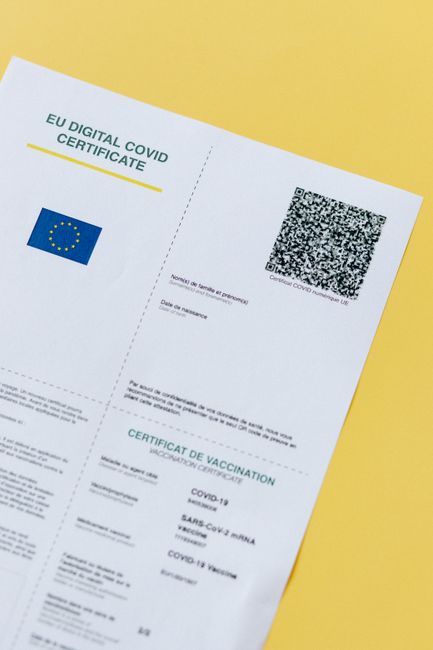
Photo by Nataliya Vaitkevich via Pexels
Packing List
The packing list details how goods are packed. Required information: total number of packages, dimensions and weight of each package, contents of each package, total gross and net weight, and shipping marks and numbers. The packing list helps customs verify shipment contents. Information must match the commercial invoice and bill of lading. Discrepancies between documents cause delays. Packing list should be detailed enough for customs to verify contents without opening every package.
Bill of Lading (B/L) or Air Waybill (AWB)
The bill of lading (sea freight) or air waybill (air freight) is the transport document. Functions: receipt for goods, evidence of contract of carriage, and document of title (for B/L). Required information: shipper and consignee details, notify party, port of loading and discharge, description of goods, and freight terms. The B/L must match other documents. For sea freight, original B/L may be required for release. For air freight, AWB is not a document of title—goods can be released to consignee.
HS Code Classification
HS (Harmonized System) code is the international product classification system. Determines: duty rates, import restrictions, and documentation requirements. HS codes are 6 digits internationally, extended to 8-10 digits by individual countries. Correct classification is essential—wrong codes mean wrong duty rates and potential penalties. Use online HS code lookup tools or consult customs broker. Provide detailed product description for accurate classification. Some products may qualify for duty exemptions or preferential rates under trade agreements.
Document Checklist Table
| Document | Purpose | Who Provides |
|---|---|---|
| Commercial Invoice | Value declaration, duty calculation | Supplier |
| Packing List | Shipment contents verification | Supplier |
| Bill of Lading/AWB | Transport contract, cargo release | Freight forwarder |
| Certificate of Origin | Origin verification, trade agreements | Supplier/Chamber of Commerce |
| Product Certifications | Compliance verification | Supplier/Testing lab |
| Insurance Certificate | Cargo insurance proof | Insurer/Forwarder |
Additional Documents for Specific Products
Certificate of Origin
Certificate of Origin (COO) certifies where goods were manufactured. Types: General Certificate of Origin, FORM A (for GSP preferences), and preferential certificates (e.g., China-ASEAN FORM E). Benefits: may qualify for reduced or zero duties under trade agreements. Required for: some products regardless of preference, and all shipments claiming preferential rates. Obtain from: supplier, local Chamber of Commerce, or China Council for Promotion of International Trade (CCPIT). Check if your products qualify for preferential rates under applicable trade agreements.
Product Certifications
Regulated products require specific certifications. Electronics: CE (Europe), FCC (US), RoHS compliance. Children’s products: CPC (US), EN71 (Europe). Food products: FDA registration, health certificates. Medical devices: FDA 510(k), CE marking. Cosmetics: FDA registration, product notification. Textiles: care labeling, fiber content. Determine required certifications before ordering. Your supplier should provide certifications, but verify authenticity. Some certifications require testing by accredited laboratories.
Import Licenses and Permits
Some products require import licenses or permits. Restricted goods: certain chemicals, pharmaceuticals, weapons. Quota goods: textiles (in some countries), agricultural products. Food and agriculture: import permits, phytosanitary certificates. Animals and animal products: veterinary certificates. Check import requirements for your specific products. Import licenses may take weeks to obtain—plan ahead. Your customs broker can advise on license requirements.
US Import Customs Clearance
US Customs Process
US customs clearance is handled by US Customs and Border Protection (CBP). Process: arrival at US port, entry summary filed (CBP Form 7501), duties and fees paid, examination (if required), and goods released. Required filings: Import Security Filing (ISF) 10+2 due 24 hours before loading, entry summary due within 15 days of arrival, and Partner Government Agency (PGA) filings if applicable. Use of customs broker is recommended for first-time importers or complex shipments.
US Duties and Taxes
US import costs include: customs duty (varies by HS code, 0-37.5%), merchandise processing fee (MPF): 0.3464% of value, minimum $31.67, maximum $614.35, harbor maintenance fee (HMF): 0.125% of value for ocean shipments, and Section 301 duties on certain China-origin goods (varies by product). Check current Section 301 duty rates—they’ve changed multiple times. Some products may qualify for duty exemptions under de minimis (under $800 for personal imports) or foreign trade zones.
ISF Filing Requirements
ISF (Import Security Filing) is required for US-bound ocean shipments. Due: 24 hours before vessel departure from origin. Required information (10 data elements): seller name and address, buyer name and address, importer of record number, consignee number, manufacturer name and address, ship-to party, country of origin, commodity HTS code, container stuffing location, and consolidator name and address. Failure to file ISF results in $5,000+ penalty. Your forwarder or broker typically handles ISF filing.
EU Import Customs Clearance
EU Customs Process
EU customs clearance is unified across member states. Process: goods arrive at EU port, customs declaration submitted (SAD – Single Administrative Document), duties and VAT calculated and paid, inspection if required, and goods released. Required documents: commercial invoice, packing list, transport document, and proof of origin if claiming preferences. EORI number is required for importers. VAT is charged at destination country rate (17-27%). Use a customs broker or freight forwarder for smooth clearance.
EU Duties and VAT
EU import costs include: customs duty (varies by HS code, 0-20%+), import VAT (destination country rate, 17-27%), and excise duty for certain products (alcohol, tobacco, energy products). VAT is calculated on: customs value + duty + shipping to EU. Some products qualify for reduced or zero duty under trade agreements. Check TARIC database for duty rates. Consider using bonded warehouses to defer duty and VAT payment.
Common Customs Clearance Issues
Issue 1: Incorrect HS Code Classification
Wrong HS code means wrong duty rate. May result in underpayment (penalties) or overpayment (lost money). Solution: get classification help from broker or use official tariff databases.
Issue 2: Document Discrepancies
Information mismatch between documents causes delays. Common errors: different values on invoice and B/L, wrong quantities, and spelling errors. Solution: review all documents before shipment.
Issue 3: Missing Certifications
Regulated products without required certifications are held. Solution: determine required certifications before ordering and verify supplier can provide them.
Issue 4: Under-Declared Value
Declaring lower value to reduce duties is illegal. Customs can verify values through various means. Penalties include fines, seizure, and criminal charges. Solution: always declare true transaction value.
Issue 5: Customs Holds and Inspections
Random or targeted inspections delay clearance. Can’t be predicted or avoided. Solution: build buffer time into delivery schedule and ensure documentation is complete.
Working with Customs Brokers
When to Use a Customs Broker
Consider using a customs broker when: you’re a first-time importer, dealing with regulated products, shipping high-value goods, handling complex classifications, or importing frequently. Benefits: expertise in classification and documentation, faster clearance, error prevention, and dealing with issues. Costs: typically $100-300 per shipment plus bond fees. For regular importers, a good broker is worth the cost. For simple, low-value shipments, you may clear customs yourself.
Choosing a Customs Broker
Select a broker with: valid license in your country, experience with your product type, knowledge of your origin country (China), good communication and responsiveness, and reasonable fees. Ask for references and check reviews. Your freight forwarder may offer customs brokerage services—this can simplify coordination. Ensure broker has your power of attorney and bond information on file.
Information to Provide Your Broker
Give your broker complete information: commercial invoice and packing list, bill of lading or air waybill, product description and intended use, HS code if known, country of origin, importer number (EIN in US, EORI in EU), and any special requirements. More information means faster, more accurate clearance. Establish a relationship with your broker for ongoing shipments.
Customs Clearance Timeline
Typical Clearance Times
Clearance time varies by country and circumstances. US: 1-5 days standard, 7-14 days if inspection required. EU: 1-3 days standard, longer for inspections. UK: 1-3 days standard. Australia: 1-3 days standard. Canada: 1-3 days standard. These are guidelines—actual times vary. Peak seasons (pre-Christmas) have longer clearance times. Plan for worst-case, not average times.
Factors Affecting Timeline
Timeline affected by: documentation completeness and accuracy, customs workload and staffing, inspection requirements, product type and risk level, and shipment value and origin. High-risk origins or products face more scrutiny. Random inspections can’t be predicted. Ensure complete, accurate documentation to minimize delays. Work with experienced forwarders and brokers who know the process.
Customs Clearance Costs
Government Fees
Government fees vary by country. US: merchandise processing fee (0.3464%, min $31.67, max $614.35), harbor maintenance fee (0.125% for ocean), and customs duty (varies by HS code). EU: customs duty (varies by HS code), import VAT (17-27% depending on country), and excise duty for certain products. UK: customs duty, import VAT (20%), and excise for certain products. Calculate total landed cost including all duties and fees before placing orders.
Service Provider Fees
Service provider fees include: customs broker fee ($100-300 per shipment), freight forwarder handling ($100-300), terminal handling charges ($100-300 per container), and demurrage if clearance delayed ($100-300/day). Get quotes from multiple providers. Some forwarders include customs clearance in their service. Factor these costs into your total landed cost calculation.
Tips for Smooth Customs Clearance
Before Shipping
Prepare properly before goods ship. Determine correct HS codes for your products. Identify required certifications and ensure supplier can provide. Verify import licenses or permits needed. Calculate duties and taxes for accurate costing. Choose experienced freight forwarder and customs broker. Provide complete, accurate information to all parties.
During Shipping
Monitor shipment and prepare for clearance. Track shipment progress. Ensure all documents received and reviewed. Submit required filings (ISF for US). Prepare duty and tax payment. Communicate with broker about any issues. Address discrepancies immediately.
After Clearance
Post-clearance activities matter too. Verify goods received match documentation. Keep all customs documents for required period (typically 5 years). Review actual costs vs. estimated. Note any issues for future shipments. Maintain records for audits. Learn from each shipment to improve future clearance processes.
Conclusion
China customs clearance requires proper documentation, accurate classification, and understanding of procedures. This guide covered: essential documents including commercial invoice, packing list, and bill of lading, HS code classification and its importance, specific requirements for US and EU imports, common issues and how to avoid them, and working with customs brokers for smooth clearance. The key principles: ensure complete and accurate documentation, classify products correctly using proper HS codes, understand destination country requirements, work with experienced professionals, and plan for potential delays. Customs clearance is a necessary step in international trade. With proper preparation and the right partners, you can navigate the process smoothly and avoid costly delays. Invest time in understanding requirements and building relationships with reliable service providers.
Need Help with China Customs Clearance?
Top China Sourcing provides customs clearance coordination and documentation assistance. We help ensure your shipments have proper documentation and connect you with reliable customs brokers. Contact us today to discuss your import needs.
Last updated: April 30, 2026 | Customs Clearance Guide by TCS Editorial Team
Sources
- US Customs and Border Protection (CBP) Import Guidelines
- European Commission TARIC Database
- World Customs Organization HS Code Reference
- China Customs Import/Export Regulations 2026
- TCS Customs Documentation Database 2026