
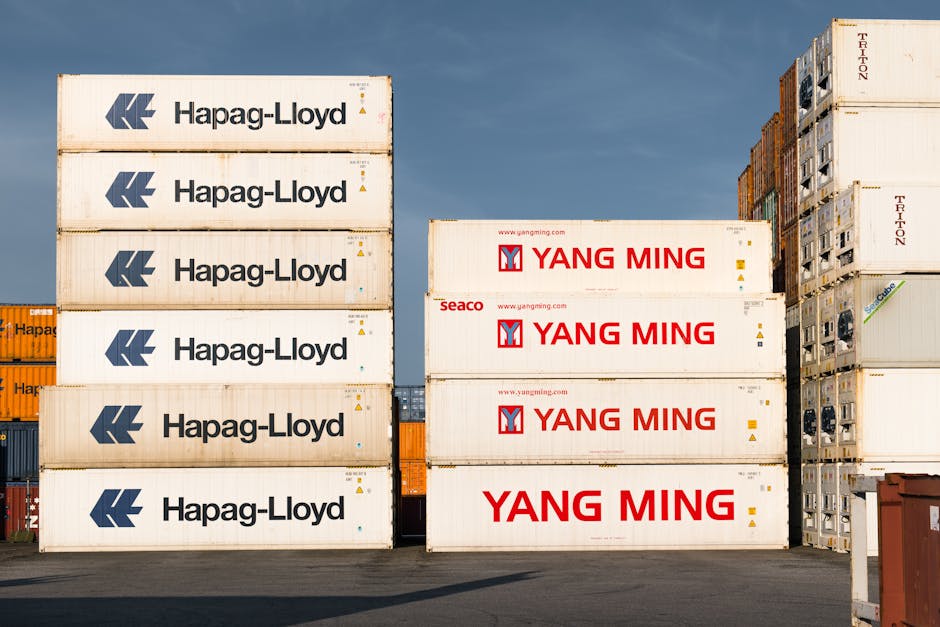
Shipping from China accounts for 10-30% of total product cost, making shipping method selection critical for profitability according to Freightos 2025 data. Choosing between air freight, ocean freight, and express shipping depends on cost, speed, and product characteristics. This comprehensive guide covers shipping from China in 2026, comparing methods, costs, and timelines to help you optimize logistics for your business.
📌 Key Takeaways
- Ocean freight: $1,500-3,000 per container, 20-40 days transit time
- Air freight: $4-8 per kg, 5-10 days transit time
- Express shipping: $8-15 per kg, 3-5 days transit time
- Cost per kg: Ocean $0.10-0.30, Air $4-8, Express $8-15
- Break-even point: Orders over 200-300 kg typically cheaper by ocean
Shipping Methods Overview
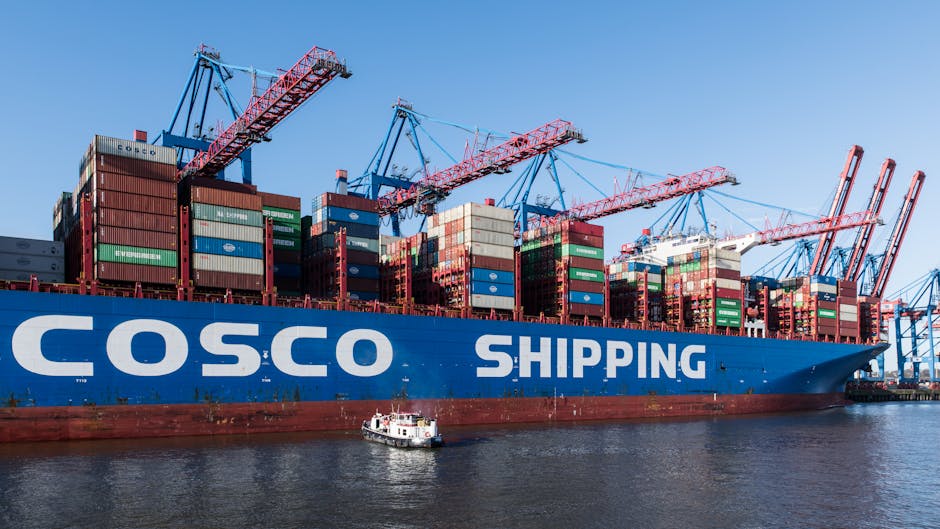
Three main shipping methods from China: Ocean freight (FCL and LCL), air freight, and express courier (DHL, FedEx, UPS). Each method has distinct cost-speed tradeoff. Ocean freight: lowest cost per kg, longest transit time (20-40 days), best for large shipments. Air freight: moderate cost, moderate speed (5-10 days), best for urgent medium shipments. Express: highest cost, fastest speed (3-5 days), best for small urgent shipments. According to Descartes 2025, 80% of China imports by volume use ocean freight, 15% air freight, 5% express.
Shipping Method Selection Factors
Shipment weight/volume: Under 100 kg—express or air. 100-500 kg—air freight or LCL ocean. 500+ kg—ocean freight (LCL or FCL). Urgency: Not urgent (4+ weeks)—ocean. Moderate urgency (1-2 weeks)—air. Very urgent (under 1 week)—express. Product value: Low value—ocean (shipping cost percentage high). High value—air or express (shipping cost percentage low). Budget constraints: Lowest cost—ocean. Fastest delivery—express. Balance—air freight.
Ocean Freight: FCL vs. LCL
Ocean freight offers two options: FCL (Full Container Load) and LCL (Less than Container Load). FCL: You rent entire container (20ft or 40ft), best for shipments filling 75%+ of container. LCL: You share container with other shippers, pay per cubic meter (CBM), best for smaller shipments. According to Freightos 2025, FCL costs $1,500-3,000 per container, LCL costs $50-150 per CBM. Break-even: 10-15 CBM (roughly half container) makes FCL cheaper than LCL.
Container Sizes and Capacities
| Container Type | Dimensions | Capacity (CBM) | Typical Cost |
|---|---|---|---|
| 20ft Standard | 5.9m × 2.35m × 2.39m | 33 CBM | $1,500-2,500 |
| 40ft Standard | 12m × 2.35m × 2.39m | 67 CBM | $2,000-3,000 |
| 40ft High Cube | 12m × 2.35m × 2.69m | 76 CBM | $2,200-3,200 |
Source: Freightos 2025, rates from Shanghai to Los Angeles
Ocean Freight Costs Breakdown
Ocean freight involves multiple costs beyond base shipping rate. FOB (Free on Board) price includes: ocean freight ($1,500-3,000), destination charges ($300-800), customs clearance ($100-300), drayage to warehouse ($200-500), and import duties (0-25%). Total landed cost: FOB price + all additional costs. According to Descartes 2025, destination charges and fees add 20-40% to base ocean freight rate. Get complete quote including all fees to accurately compare options.
Hidden Ocean Freight Costs
Destination charges: Terminal handling, documentation, customs clearance. Drayage: Trucking from port to warehouse. Demurrage: Fee for containers held at port beyond free time (5-7 days), $100-300/day. Detention: Fee for containers held beyond free time outside port, $50-150/day. Storage: Warehouse storage if can’t receive immediately. Chassis fee: Rental for container chassis, $50-100/day. Plan for these costs and ensure logistics ready to receive shipment promptly.
Air Freight: When Speed Matters
Air freight is 10-20x more expensive than ocean freight per kg, but 4-8x faster. Use air freight when: shipment under 500 kg, delivery needed in 1-2 weeks, product value high (shipping cost percentage low), or testing new product (fast feedback). According to IATA 2025, air freight rates from China to US: $4-8 per kg depending on route and season. Transit time: 5-10 days including customs clearance. Air freight is charged by actual weight or volumetric weight (whichever is higher).
Volumetric Weight Calculation
Air freight uses volumetric weight for large light items: Volumetric weight (kg) = Length × Width × Height (cm) ÷ 6000. Example: Box 50cm × 40cm × 30cm = 60,000 ÷ 6000 = 10 kg volumetric weight. If actual weight is 5 kg, you pay for 10 kg (volumetric). If actual weight is 15 kg, you pay for 15 kg (actual). Package efficiently to minimize volumetric weight—remove unnecessary packaging, use compact boxes.
Express Shipping: Fastest Option
Express shipping (DHL, FedEx, UPS) is fastest but most expensive option. Use express for: shipments under 100 kg, delivery needed in 3-5 days, samples, or urgent replenishment. According to ShipBob 2025, express rates from China to US: $8-15 per kg for 50+ kg shipments, $15-30 per kg for under 50 kg. Express includes door-to-door service, customs clearance, and tracking. No hidden fees—quoted price is total cost. Best for small urgent shipments where speed outweighs cost.
Express Shipping Comparison
| Carrier | Rate (50 kg) | Transit Time | Best For |
|---|---|---|---|
| DHL | $8-12/kg | 3-5 days | Speed, reliability |
| FedEx | $9-13/kg | 3-6 days | Tracking, service |
| UPS | $9-14/kg | 4-6 days | US delivery network |
Source: Carrier rate cards 2026, China to US
Incoterms: Who Pays for Shipping
Incoterms define responsibility for shipping costs and risks. Common terms for China imports: EXW (Ex Works): Buyer pays all shipping from factory. FOB (Free on Board): Supplier delivers to port, buyer pays ocean freight and destination charges. CIF (Cost, Insurance, Freight): Supplier pays to destination port, buyer pays destination charges. DDP (Delivered Duty Paid): Supplier delivers to buyer’s door, all costs included. According to ICC 2025, FOB is most common for China imports (60% of shipments), DDP growing for e-commerce sellers (25%).
Incoterm Cost Comparison
Example: $10,000 product value, Shanghai to Los Angeles. EXW: $10,000 product + $500 inland China + $2,000 ocean + $500 destination = $13,000. FOB: $10,500 product (includes to port) + $2,000 ocean + $500 destination = $13,000. CIF: $12,500 product (includes to LA port) + $500 destination = $13,000. DDP: $13,500 product (all included). Total cost similar, but FOB gives buyer more control over shipping. Choose based on experience level—DDP for beginners, FOB for experienced importers.
Shipping Cost Optimization Strategies
Reduce shipping costs with these strategies: Consolidate shipments (combine multiple orders into one container), optimize packaging (reduce volumetric weight), negotiate rates (freight forwarders offer discounts for volume), ship during off-peak (avoid Q4 premium rates), use slower transit (longer transit = lower cost), and compare multiple quotes (rates vary 20-30% between carriers). According to Flexport 2025, optimization can reduce shipping costs 15-25% without sacrificing delivery time.
Cost Optimization Example
Original: 5 separate LCL shipments, 2 CBM each, $150/CBM = $1,500 total. Optimized: Consolidate into one 10 CBM FCL shipment = $2,000 total. Wait, that’s more expensive. Better: Consolidate into one 10 CBM LCL shipment = $1,200 total (volume discount). Savings: $300 (20%). Or wait to fill 15 CBM for FCL = $2,000 total, $133/CBM vs. $150/CBM LCL. Calculate carefully—consolidation doesn’t always save money if you’re paying for unused container space.
Common Shipping Mistakes
Mistake 1: Not Calculating Total Landed Cost
Focus only on product price or shipping price, not total cost. Calculate: Product cost + shipping + customs duties + destination charges + delivery to warehouse = total landed cost. Compare suppliers on landed cost, not just product price. A supplier with higher product price but lower shipping cost may be better overall.
Mistake 2: Choosing Cheapest Option Without Considering Time
Ocean freight is cheapest, but 30-40 day transit time means capital tied up longer, potential stockouts, and slower inventory turnover. Calculate cost of capital tied up and stockout risk when comparing shipping methods. Sometimes air freight is worth the premium for faster inventory turnover.
Mistake 3: Not Planning for Delays
Shipping delays are common: port congestion (5-15 days), customs inspections (3-7 days), weather (2-5 days). Plan buffer into delivery timeline: add 7-14 days to quoted transit time. Order early to avoid stockouts. According to Descartes 2025, average delay for China-US ocean freight: 8 days. Build this into planning.
Sources
- Freightos 2025 Global Shipping Index
- Descartes Datamyne 2025 Import Statistics
- IATA 2025 Air Freight Rates
- ShipBob 2025 Express Shipping Analysis
Conclusion: Choose Shipping Method Based on Total Cost
Shipping from China in 2026 requires balancing cost, speed, and shipment size. Ocean freight: $0.10-0.30/kg, 20-40 days, best for 500+ kg. Air freight: $4-8/kg, 5-10 days, best for 100-500 kg urgent. Express: $8-15/kg, 3-5 days, best for under 100 kg urgent. Calculate total landed cost including all fees. Optimize by consolidating shipments, optimizing packaging, and comparing quotes. Plan for delays (add 7-14 days buffer). Choose shipping method based on total cost and business needs, not just lowest freight rate.
Need Help with Shipping from China?
Partner with topchinasourcing for expert logistics support and freight coordination. Contact us today for a free consultation.
Last updated: April 26, 2026 | Research by TCS Editorial Team
Shipping Methods Comparison: Cost vs. Speed 2026
Choosing the right shipping method balances cost, speed, and reliability. Ocean freight costs $1,500-$4,000 per 40-foot container but takes 25-40 days, while air freight costs $4-$8 per kg with 5-10 day delivery. Understanding these trade-offs helps optimize your supply chain.
Ocean Freight Options
Full Container Load (FCL) offers lowest per-unit cost for shipments over 15 CBM, with 40-foot containers costing $2,500-$4,000 to US West Coast and $3,500-$5,500 to East Coast. Less than Container Load (LCL) suits smaller shipments (2-15 CBM) at $50-$150 per CBM but involves longer transit times (5-10 days extra) and higher handling risk. Choose FCL for shipments over $15,000 value or 15+ CBM volume.
Air Freight vs. Express Shipping
Air freight ($4-$8 per kg) suits shipments of 100-500 kg requiring 5-10 day delivery. Express shipping (DHL, FedEx, UPS) costs $8-$15 per kg for 3-5 day delivery on packages under 100 kg. For urgent shipments under 50 kg, express shipping often provides better value due to included customs clearance and door-to-door service.
Shipping Cost Optimization Strategies
Shipping costs represent 8-15% of total product cost. Strategic planning can reduce these costs by 20-40% while maintaining delivery reliability.
Consolidation and Volume Optimization
Consolidate multiple supplier shipments into single containers to achieve FCL rates. Consolidation services charge $200-$500 per supplier but save $1,000-$3,000 per container compared to LCL rates. Plan production schedules to align with shipping windows, allowing 2-3 week consolidation periods.
Port Selection and Routing
West Coast ports (Los Angeles, Long Beach) offer 5-7 day shorter transit times from China but face congestion delays of 5-15 days during peak seasons. East Coast ports (New York, Savannah) have longer transit times (35-45 days) but more reliable schedules. Consider intermodal routing through Canada or Mexico for potential duty savings under USMCA.
Customs and Import Documentation
Proper documentation prevents customs delays and additional fees. Missing or incorrect documents cause 18% of shipments to experience delays averaging 5-10 days.
Required Shipping Documents
Essential documents include: (1) Commercial Invoice with accurate HS codes and values, (2) Packing List with weights and dimensions, (3) Bill of Lading (ocean) or Airway Bill (air), (4) Certificate of Origin for duty preference claims, and (5) Product-specific certifications (FCC, FDA, CPSC). Work with freight forwarders who provide document checking services ($50-$100) to prevent errors.
Working with Freight Forwarders
Freight forwarders coordinate shipping, customs clearance, and delivery. Select forwarders based on: (1) Experience with your product category, (2) Competitive rates (compare 3-5 quotes), (3) Communication responsiveness (under 4-hour response time), and (4) Technology integration for tracking. Expect to pay $200-$500 for forwarding services plus shipping costs.