First time importing from China can feel overwhelming with unfamiliar processes, regulations, and risks, but 150,000+ US businesses successfully import from China annually, generating $500+ billion in trade. The key is understanding the step-by-step process, common pitfalls, and best practices that experienced importers follow. This comprehensive beginner’s guide walks you through every stage of your first China import in 2026, from product selection to customs clearance, with actionable advice to ensure success.
Step 1: Product Selection and Market Research
Successful importing starts with the right product. Evaluate products based on: market demand (use Amazon Best Sellers, Google Trends, Jungle Scout), competition level (avoid oversaturated markets), profit margin potential (target 30-50% gross margin), import feasibility (size, weight, regulations), and differentiation opportunity (private label, unique features). First-time importers should start with simple, non-regulated products: home goods, accessories, or general merchandise. Avoid complex products (electronics, children’s products, medical devices) for your first import.
Product Research Tools
Use these tools for product research: Amazon Best Sellers and Movers & Shakers for trending products, Jungle Scout or Helium 10 for sales data and competition analysis, Google Trends for search interest, Alibaba for supplier availability and pricing, and social media (TikTok, Instagram) for emerging trends. Invest 20-40 hours in product research before committing. The right product selection determines your importing success—don’t rush this step.
Profitability Calculation
Calculate potential profitability before ordering: target selling price – product cost – shipping – duties – platform fees – marketing costs = profit. For a $20 product selling on Amazon: $20 selling price – $5 product cost – $2 shipping – $1 duty – $3 FBA fees – $4 advertising = $5 profit (25% margin). Target minimum 25% net margin for sustainable business. Use FBA calculators (Amazon’s Revenue Calculator, Jungle Scout) for accurate estimates.
Step 2: Finding and Vetting Suppliers
Supplier Search on Alibaba
Alibaba.com is the primary platform for finding suppliers: search for your product with specific keywords, filter by “Manufacturer” and “Verified Supplier”, check supplier ratings (4.5+ stars, 90%+ response rate), review company profiles and certifications, and shortlist 5-10 suppliers for detailed evaluation. Request quotes from multiple suppliers to compare pricing, MOQ, and capabilities. Don’t choose solely on price—quality and reliability matter more.
Supplier Verification Checklist
Verify suppliers before committing: request business license and verify through gsxt.gov.cn, ask for factory photos and videos, check product certifications (CE, FCC, FDA if applicable), request customer references, and order samples before bulk production. Red flags include: no business license, prices 30-50% below market, poor communication, and unwillingness to provide documentation. Invest $200-500 in sample orders from 3-5 suppliers before selecting your manufacturer.
Sample Evaluation
Order samples from shortlisted suppliers: expect to pay $50-200 per sample including shipping, allow 1-2 weeks for sample production and delivery, evaluate quality, functionality, and packaging, compare samples side-by-side, and request modifications if needed. Sample quality predicts production quality—never skip this step. If samples don’t meet standards, find alternative suppliers rather than hoping production will be better.
Step 3: Understanding MOQ and Negotiation
What Is MOQ?
MOQ (Minimum Order Quantity) is the smallest order a supplier will accept. Typical MOQs: 500-1,000 units for standard products, 100-500 units for customized products, and 50-100 units for stock products. MOQs exist because: production setup costs require volume to amortize, suppliers need minimum revenue per order, and inventory management favors larger orders. First-time importers often struggle with MOQs—negotiate strategically.
MOQ Negotiation Strategies
Negotiate MOQs: offer to pay slightly higher unit price for smaller quantity, commit to larger future orders, start with stock products (lower MOQ), combine multiple products in one order, and use trading companies for small quantities. For your first order, consider accepting higher MOQ to build supplier relationship, then negotiate lower MOQ for repeat orders. Don’t push too hard—suppliers who accept unprofitably low MOQs may cut quality corners.
Order Quantity Decision
Decide order quantity based on: market demand (how many can you sell in 3-6 months), cash flow (can you afford larger orders), storage capacity (warehouse or FBA limits), and risk tolerance (what if products don’t sell). For first-time importers, start with 3-6 months inventory—enough to test market without excessive risk. Avoid ordering 12+ months inventory for unproven products.
Step 4: Placing Your Order
Purchase Agreement Essentials
Formalize orders with written agreements: product specifications (materials, dimensions, colors), quality standards (acceptable defect rate, AQL level), pricing and payment terms, delivery timeline with penalties for delays, packaging and labeling requirements, and warranty and return policy. For orders over $5,000, use formal purchase contracts. For smaller orders, detailed email confirmation may suffice. Clear agreements prevent misunderstandings and provide recourse if issues arise.
Payment Terms and Methods
Standard payment terms: 30% deposit with order, 70% before shipping. Payment methods: Alibaba Trade Assurance (recommended for first-time importers—payment protection), wire transfer (for established relationships), and PayPal (for samples and small orders under $1,000). Never pay 100% upfront or use Western Union. Trade Assurance protects against: non-delivery, quality issues, and shipping delays. Use Trade Assurance for all Alibaba orders.
Production Timeline
Typical production timeline: sample production 7-14 days, sample approval 3-7 days, bulk production 15-30 days (depending on quantity and complexity), quality inspection 1-3 days, and shipping 25-35 days (sea freight) or 5-10 days (air freight). Total timeline: 50-90 days from order to delivery. Plan inventory accordingly—don’t wait until stock-out to reorder. Build 2-4 week buffer into your timeline for unexpected delays.
Step 5: Quality Control and Inspection
Why Quality Control Matters
Quality issues cost 10-30% of order value through: returns, refunds, negative reviews, and lost customers. Prevent issues through: pre-production sample approval, during-production inspection (for orders over $10,000), and pre-shipment inspection (essential for all orders). Quality control costs $200-600 per inspection but prevents $2,000-20,000 in losses. Don’t skip inspection to save money—quality failures are far more expensive.
Inspection Types
Choose appropriate inspection: pre-production inspection (verify materials and components), during-production inspection (check quality mid-production, catch issues early), pre-shipment inspection (inspect finished goods before shipping), and container loading supervision (ensure correct quantity and proper loading). For first-time importers, pre-shipment inspection is essential. Use third-party inspection companies: SGS, Intertek, QIMA, or Inspectorio.
AQL Standards
AQL (Acceptable Quality Level) defines acceptable defect rates: AQL 2.5 for major defects (2.5% defect rate acceptable), AQL 4.0 for minor defects (4.0% defect rate acceptable), and AQL 0 for critical defects (zero tolerance for safety issues). Specify AQL standards in purchase agreements. If inspection reveals defects above AQL, supplier must rework or replace products before shipping. Don’t accept shipments with high defect rates.
Step 6: Shipping and Logistics
Shipping Options Comparison
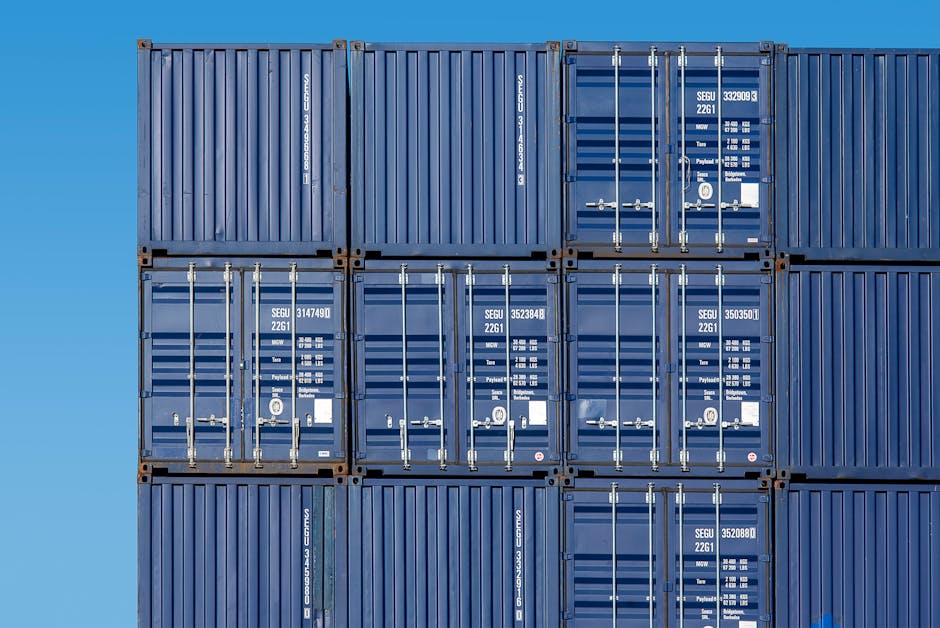
Choose shipping method based on urgency and cost: sea freight (most economical for orders over 500 kg, $2,000-5,000 per container, 25-35 days), air freight (for urgent orders, $4-8 per kg, 5-10 days), and express shipping (for samples and small orders, $30-80 per kg, 3-7 days). For first-time importers with orders over $5,000, sea freight is typically most economical. Use freight forwarders to handle logistics—they coordinate shipping, documentation, and customs.
Incoterms Explained
Incoterms define responsibility for shipping costs and risks: EXW (Ex Works—you arrange all shipping), FOB (Free on Board—supplier delivers to port, you handle shipping), and DDP (Delivered Duty Paid—supplier handles everything including duties). FOB is most common for China imports—you control shipping and costs. EXW gives maximum control but requires logistics expertise. DDP is convenient but more expensive. Understand Incoterms before negotiating pricing.
Working with Freight Forwarders
Freight forwarders coordinate international shipping: book cargo space, handle documentation, arrange customs clearance, and coordinate delivery. Choose forwarders with: China-US experience, competitive pricing, good communication, and tracking capabilities. Get quotes from 3-5 forwarders. Forwarder fees: $200-500 for coordination, plus shipping costs. Good forwarders save time and prevent problems—worth the cost for first-time importers.
Step 7: Customs Clearance and Import Duties
Import Documentation Required
Documents for US customs clearance: commercial invoice (product description, value, HTS code), packing list (quantity, weight, dimensions), bill of lading (shipping document), certificate of origin (proves China origin), and product certifications (if required). Supplier provides most documents. Ensure accuracy—errors cause delays and penalties. Work with customs brokers for smooth clearance.
HTS Codes and Duty Rates
HTS (Harmonized Tariff Schedule) codes classify products for duty calculation: find your product’s HTS code at hts.usitc.gov, duty rates range from 0-25% depending on product, and Section 301 tariffs add 7.5-25% on many China products. Calculate duty on FOB value (product + packaging + shipping to port). For a $10,000 shipment with 10% duty: $1,000 duty. Verify HTS code before importing—incorrect classification leads to penalties.
Customs Broker Services
Customs brokers handle import clearance: file customs entries, calculate and pay duties, handle inspections, and resolve issues. Broker fees: $50-150 per entry plus bond fees. Use licensed customs brokers for smooth clearance. For first-time importers, brokers are essential—they navigate complex regulations and prevent costly mistakes. Find brokers through: National Customs Brokers & Forwarders Association (NCBFAA) or freight forwarder recommendations.
Step 8: Receiving and Inspecting Goods
Receiving Shipment
When shipment arrives: inspect packaging for damage before signing delivery receipt, count cartons and verify against packing list, document any damage with photos, and report issues immediately to freight forwarder and supplier. Don’t sign for shipments without inspection—signing acknowledges receipt in good condition. If damage is visible, note “received damaged” on delivery receipt.
Post-Arrival Inspection
After receiving, conduct thorough inspection: randomly sample 10-20% of shipment, check for defects, verify product matches approved sample, test functionality, and check packaging and labeling. Document any issues with photos and detailed notes. If defect rate exceeds agreed AQL, contact supplier for resolution: replacement, refund, or credit on future orders. Address issues promptly—delays complicate resolution.
Inventory Management
Organize received inventory: label products with SKU and received date, record inventory in management system, store in clean, dry location, and implement FIFO (First In, First Out) rotation. For Amazon FBA: prepare products per Amazon requirements, create shipping plan, and schedule delivery to FBA centers. Proper inventory management prevents losses and enables accurate reorder timing.
Common First-Time Importer Mistakes
Mistake 1: Skipping Sample Orders
Ordering bulk without samples is the #1 mistake. Samples reveal: product quality, supplier capability, and potential issues. Sample costs ($100-300) are tiny compared to bulk order risk ($5,000-50,000). Always order samples from multiple suppliers, compare quality, and approve samples before bulk production. Skipping samples to save $200 can cost $20,000 in quality failures.
Mistake 2: Choosing Lowest Price Supplier
Lowest price often means lowest quality. Suppliers offering 30-50% below market price cut corners: inferior materials, poor quality control, and unreliable delivery. Price should be one factor among: quality, reliability, communication, and capability. Pay fair price for quality products—cheap products cost more through returns, complaints, and damaged reputation.
Mistake 3: Not Using Trade Assurance
Trade Assurance protects buyers: payment held until you confirm product quality, refund if supplier doesn’t ship, and dispute resolution if quality issues arise. Yet 30% of first-time importers don’t use it, risking full payment loss. Always use Trade Assurance for Alibaba orders—it’s free protection. If supplier refuses Trade Assurance, find another supplier.
Mistake 4: Underestimating Timeline
First-time importers often underestimate timeline: production delays (10-20% of orders), shipping delays (weather, port congestion), and customs delays (documentation issues). Plan for 60-90 days from order to delivery, with 2-4 week buffer. Don’t promise customers delivery dates you can’t meet. Build timeline buffer into your planning.
Mistake 5: Ignoring Quality Inspection
Skipping inspection to save $300-500 is false economy. Quality issues discovered after delivery cost: customer returns (15-30% of product value), negative reviews (damage brand), and potential legal liability. Inspection catches issues before shipping when supplier can fix them. Always inspect orders over $5,000—smaller orders, inspect yourself upon receipt.
2026 Importing Trends for Beginners
Digital Sourcing Platforms
New platforms simplify importing: Alibaba’s AI-powered supplier matching, QIMA Connect for quality control booking, and Flexport for logistics management. Digital tools reduce complexity for first-time importers. However, technology doesn’t replace due diligence—verify suppliers and inspect products regardless of platform sophistication.
Smaller MOQs Available
More suppliers offer lower MOQs: 100-300 units for customized products (down from 500-1,000), driven by competition and technology. Lower MOQs reduce risk for first-time importers. Negotiate MOQs—suppliers increasingly flexible for serious buyers. Start smaller to test market, then scale with larger orders.
Sustainability Requirements
Growing consumer demand for sustainable products: eco-friendly materials, ethical manufacturing, and carbon-neutral shipping. Consider sustainability in product selection—it’s a differentiator that justifies premium pricing. Verify sustainability claims through certifications (FSC, GOTS, Fair Trade). Sustainability is no longer optional for many markets.
Conclusion: Start Small, Learn Fast
First time importing from China requires careful planning and execution across 8 steps: product selection and market research, finding and vetting suppliers, understanding MOQ and negotiation, placing your order, quality control and inspection, shipping and logistics, customs clearance and import duties, and receiving and inspecting goods. Start with simple products and smaller orders to learn the process. Invest time in supplier verification and quality control—these steps prevent costly mistakes. Use Trade Assurance for payment protection, work with freight forwarders and customs brokers for logistics, and build timeline buffers into your planning. Common mistakes (skipping samples, choosing lowest price, ignoring inspection) are avoidable with proper process. With this guide, you’re equipped to successfully navigate your first China import and build foundation for profitable importing business.
Ready to Start Importing from China?
Partner with topchinasourcing for expert guidance through your first import. Contact us today for a free consultation and start your importing journey with confidence.