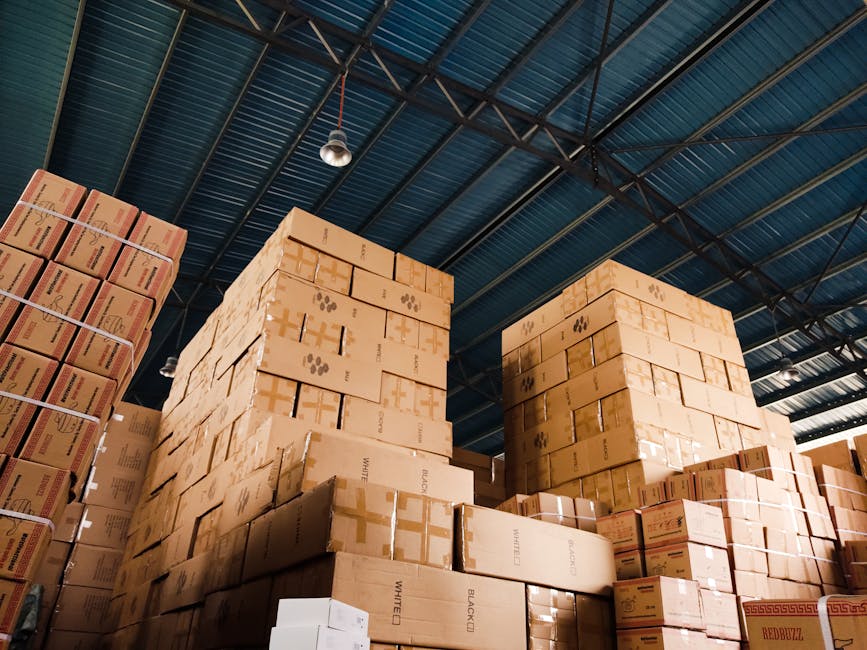
Amazon FBA sourcing from China generated over $450 billion in gross merchandise sales in 2025, with private label sellers averaging 25-40% profit margins when sourcing directly from Chinese manufacturers. However, 65% of new Amazon FBA sellers fail within their first year due to sourcing mistakes: poor supplier selection, quality issues, and miscalculated costs. This comprehensive guide reveals the exact process successful 7-figure Amazon sellers use to source products from China profitably in 2026.
Why Source from China for Amazon FBA in 2026
China manufactures 70% of all products sold on Amazon globally, with manufacturing costs 40-60% lower than US or European suppliers. For Amazon FBA sellers, this cost advantage translates to gross margins of 35-50% compared to 15-25% when sourcing domestically. The key product categories dominating Amazon FBA sourcing from China include electronics (28% of FBA imports), home and kitchen (22%), beauty and personal care (15%), and pet supplies (12%).
Cost Advantage Breakdown
A typical Amazon FBA product sourced from China costs $3-8 to manufacture and sells for $20-40 on Amazon. Here’s the math: manufacturing cost $5, Amazon referral fee 15% ($4.50), FBA fees $6-8, shipping $1-2, and total costs $16.50-19.50. At a $30 selling price, your net profit is $10.50-13.50 per unit—a 35-45% margin. Compare this to US manufacturing at $12-15 per unit, which would reduce your margin to 10-20%.
Manufacturing Hub Specialization
China’s manufacturing ecosystem has evolved into specialized hubs: Shenzhen for electronics and tech accessories, Guangzhou for textiles and apparel, Yiwu for small commodities and home goods, and Dongguan for general manufacturing. Sourcing from the right hub reduces production costs by 10-15% and improves quality through specialized expertise. For example, Bluetooth earbuds manufactured in Shenzhen average $4.50 per unit, while the same product from a general factory in another region costs $5.50-6.00.
Step 1: Product Research and Validation
Use Amazon Data Tools for Product Discovery
Professional Amazon FBA sellers use tools like Jungle Scout, Helium 10, and AMZScout to identify profitable product opportunities. Key metrics to evaluate: monthly revenue ($10,000+ minimum), monthly sales volume (300+ units), number of reviews (under 150 for new sellers to compete), and price point ($20-50 sweet spot for FBA profitability). These tools cost $29-99/month but save thousands in failed product launches by validating demand before you invest.
Analyze Competition and Market Saturation
Before sourcing any product, analyze the top 10 sellers on the first page of Amazon search results. Calculate their average review count, rating, and price. If the top 10 sellers all have 500+ reviews and 4.5+ ratings, the market is too saturated for new entrants. Look for products where the #10 seller has under 100 reviews—this indicates room for competition. Also check for private label opportunities where you can differentiate through branding, packaging, or product improvements.
Calculate Profitability Before Sourcing
Use Amazon FBA calculators (free tools from Jungle Scout and Helium 10) to estimate profitability before placing orders. Input your estimated manufacturing cost, shipping cost, product dimensions, and selling price. The calculator shows your break-even point and profit margin. Target minimum 25% net margin after all Amazon fees. If the numbers don’t work at your target price point, either find a cheaper supplier or choose a different product.
Step 2: Finding Reliable Chinese Suppliers
Alibaba: The Primary Sourcing Platform
Alibaba hosts over 10 million suppliers, but only 2-3% are legitimate manufacturers suitable for Amazon FBA. Filter suppliers by “Gold Supplier” status (verified by Alibaba), “Trade Assurance” (payment protection), and years in business (5+ years preferred). Look for suppliers with 90%+ response rate and 4.5+ star ratings. Request quotes from 10-15 suppliers for each product to compare pricing, minimum order quantities (MOQ), and production capabilities.
Supplier Verification Process
Before placing orders, verify suppliers through multiple channels: request business licenses and export permits, ask for references from existing Amazon FBA clients, conduct video calls to see their facility, and order samples from 3-5 shortlisted suppliers. Red flags include suppliers who refuse video calls, can’t provide client references, or offer pricing 30-40% below market average (indicating quality shortcuts). Legitimate manufacturers have websites, physical addresses, and professional communication.
Understanding Factory vs. Trading Company
On Alibaba, 60-70% of listed “suppliers” are trading companies, not actual factories. Trading companies add 10-20% markup but provide value through supplier networks, quality control, and logistics coordination. For new Amazon FBA sellers, trading companies often provide better service and lower MOQs (100-500 units vs. 1,000+ from factories). As your volume grows to $50,000+ annually, transition to direct factory relationships for better pricing and control.
Step 3: Sample Evaluation and Quality Testing
Order Samples from Multiple Suppliers
Never place production orders without evaluating samples first. Order samples from 3-5 suppliers at $30-100 each (including shipping). Evaluate samples for: material quality, construction and durability, packaging quality, and comparison to competitor products on Amazon. Document all findings with photos and notes. This process takes 2-3 weeks but prevents $5,000-20,000 losses from poor quality production runs.
Conduct Product Testing
For electronics, children’s products, and items with safety implications, conduct third-party testing through labs like SGS, Intertek, or Bureau Veritas. Testing costs $200-800 depending on product complexity but is mandatory for Amazon compliance. Common certifications required: CE (European market), FCC (US electronics), FDA (food and medical devices), and CPSIA (children’s products). Failure to obtain certifications results in Amazon listing removal and potential account suspension.
Request Production Samples
After approving initial samples, request “pre-production samples” before your main order. These samples use actual production materials and processes, giving you the most accurate representation of final product quality. Pre-production samples cost $100-300 but are essential for orders over $5,000. Compare pre-production samples to your original approved samples to ensure consistency.
Step 4: Negotiating Pricing and Terms
Understand Supplier Pricing Structure
Chinese supplier pricing includes: raw materials (40-50% of cost), labor (20-30%), overhead and profit (20-30%), and packaging (5-10%). When negotiating, understand which costs are fixed (materials) versus flexible (profit margin). Suppliers typically quote 20-30% above their minimum acceptable price, leaving room for negotiation. However, pushing too hard on price often results in quality shortcuts—maintain a fair margin for the supplier.
Negotiate MOQ and Lead Time
Standard MOQ for custom products is 500-1,000 units, but suppliers often accept 100-300 units for first orders. Offer to pay 10-15% premium for lower MOQ on trial orders. Lead time for production averages 15-30 days, but rush orders (7-10 days) cost 20-30% more. For Amazon FBA, plan 60-90 days from order placement to inventory arriving at Amazon warehouses: 20-30 days production, 20-30 days sea freight, 5-10 days customs and FBA processing.
Payment Terms and Protection
Standard payment terms: 30% deposit before production, 70% balance before shipment. Use Alibaba Trade Assurance for payment protection—funds are held until you confirm product quality. For orders over $10,000, negotiate 30% deposit, 40% after quality inspection, and 30% after receiving goods. Never pay 100% upfront, and avoid wire transfers to personal bank accounts. Legitimate suppliers accept Trade Assurance, PayPal, or corporate bank transfers.
Step 5: Quality Control and Inspection
Pre-Production Inspection
Before production begins, verify raw materials and components match your specifications. This is critical for products with specific material requirements (e.g., food-grade silicone, BPA-free plastics). Pre-production inspection costs $150-250 but prevents issues like suppliers substituting cheaper materials. For orders over $10,000, pre-production inspection is essential.
During Production Inspection
For orders over 1,000 units, conduct inspection when 20-30% of production is complete. This allows you to catch quality issues early and make corrections before the entire batch is finished. During production inspection costs $200-300 and takes 1-2 days. Check for: correct materials, proper assembly, packaging quality, and production consistency.
Final Random Inspection (AQL)
Before shipment, conduct final inspection using AQL (Acceptable Quality Level) standards. AQL 2.5/4.0 is standard for consumer goods: inspect random samples representing the batch, and reject shipments with defect rates above 2.5% for major defects or 4.0% for minor defects. Third-party inspection companies like QIMA, SGS, and Intertek charge $250-350 per inspection. Never skip final inspection—it’s your last chance to catch issues before products ship to Amazon.
Step 6: Shipping and Logistics to Amazon FBA
Sea Freight vs. Air Freight Cost Comparison
For orders over 500 kg, sea freight costs $1.50-3.00 per kg with 25-35 day transit time. Air freight costs $5-8 per kg with 5-10 day transit time. For Amazon FBA sellers, sea freight is typically 60-70% cheaper for orders over $5,000. However, air freight makes sense for urgent inventory replenishment or lightweight, high-value products. Calculate total landed cost including freight, customs duties, and FBA preparation fees.
Amazon FBA Labeling and Preparation
Products shipped to Amazon FBA require FNSKU labels on each unit, outer carton labels, and proper packaging meeting Amazon’s requirements. Suppliers can apply FNSKU labels for $0.05-0.15 per unit, or you can use FBA prep services in the US for $0.50-1.00 per unit. For orders over 1,000 units, having the supplier apply labels is 70-80% cheaper. Provide suppliers with your FNSKU labels and detailed packaging specifications.
Customs Clearance and Import Duties
Products imported from China to the US are subject to Section 301 tariffs ranging from 7.5-25% depending on product category. Check your product’s HTS code (Harmonized Tariff Schedule) to determine exact duty rates. Use tools like SimplyDuty or Freightos to calculate landed costs. For Amazon FBA sellers, import duties add 10-20% to product costs—factor this into your pricing calculations. Consider using a customs broker ($200-400 per shipment) for smooth clearance.
Step 7: Amazon FBA Launch Strategy
Optimize Product Listing for SEO
Your Amazon product listing determines whether customers find and buy your product. Include primary keyword in title (first 80 characters), bullet points (5 bullets with secondary keywords), and description. Use high-quality images (1,000+ pixels, white background, lifestyle photos). Backend keywords allow 250 characters—use all available space with relevant search terms. Tools like Helium 10’s Cerebro reveal competitor keywords to target.
Amazon PPC Advertising for Launch
New Amazon FBA products need PPC (Pay-Per-Click) advertising to generate initial sales and reviews. Budget $500-1,500 for launch PPC campaigns over 30-60 days. Target automatic campaigns for keyword discovery, then move profitable keywords to manual campaigns. Aim for 10-15 sales per day during launch to build momentum and improve organic ranking. ACOS (Advertising Cost of Sales) of 30-50% is acceptable during launch; optimize for 15-25% after 90 days.
Generate Initial Reviews
Amazon’s Vine program provides free products to top reviewers in exchange for honest reviews. Enroll new products in Vine for $200 (plus product costs) to generate 10-30 reviews within 30 days. Also use Amazon’s “Request a Review” button (available in Seller Central) to automatically request reviews from customers 5-30 days after purchase. Never incentivize reviews or use review manipulation—Amazon permanently suspends accounts for review policy violations.
Common Amazon FBA Sourcing Mistakes to Avoid
Miscalculating Total Landed Cost
New sellers often calculate only manufacturing cost and ignore: shipping ($1-3 per unit), import duties (7.5-25%), FBA fees ($3-8 per unit), Amazon referral fees (15%), PPC advertising ($2-5 per unit during launch), and returns (5-10% of sales). These costs add $8-15 per unit to your manufacturing cost. Always calculate total landed cost before placing orders to ensure profitability.
Ignoring Quality Control
Skipping quality inspection to save $250-350 costs $5,000-20,000 in customer returns, negative reviews, and potential account suspension. Amazon customers expect high quality—one defective product can generate a 1-star review that damages your listing’s conversion rate by 30-50%. Budget for quality inspection on every order; it’s insurance, not an expense.
Over-Ordering Initial Inventory
Ordering 3,000 units for your first product launch ties up $15,000-30,000 in inventory and risks Amazon long-term storage fees ($6.90 per cubic foot per month after 181 days). Start with 500-1,000 units to test market demand. Reorder when inventory drops to 30-45 days of supply. Use Amazon’s Inventory Performance Index (IPI) to optimize stock levels—maintain IPI above 500 to avoid storage restrictions.
2026 Trends: Amazon FBA Sourcing Evolution
AI-Powered Product Research
Tools like Jungle Scout and Helium 10 now use AI to identify trending products, predict demand, and analyze competition automatically. AI product research reduces time-to-market by 60-70% and improves product selection accuracy. However, AI tools can’t replace human judgment—validate AI recommendations with manual research before committing to products.
Supplier Diversification Beyond China
Rising tariffs and geopolitical risks drive Amazon FBA sellers to diversify sourcing beyond China. Vietnam, India, and Mexico offer 10-20% lower tariffs and faster shipping to US markets. However, manufacturing infrastructure outside China is less developed, resulting in 15-25% higher costs and longer lead times. Consider dual-sourcing: China for established products, alternative countries for new product development.
Direct-to-Amazon Fulfillment
Amazon’s “Send to Amazon” program allows Chinese suppliers to ship directly to FBA warehouses, reducing logistics costs by 20-30% and transit time by 10-15 days. Suppliers handle customs clearance and FBA preparation, simplifying the process for sellers. However, direct-to-Amazon requires trusted suppliers with FBA experience—work with established partners only.
Conclusion: Master Amazon FBA Sourcing from China
Successful Amazon FBA sourcing from China requires systematic execution: product research and validation, supplier verification, quality control, and strategic launch planning. By following this 7-step process, you’ll avoid the costly mistakes that cause 65% of new sellers to fail within their first year. Start with small orders (500-1,000 units), invest in quality control, and scale based on proven demand. With proper execution, Amazon FBA sourcing from China delivers 25-45% profit margins and builds a sustainable e-commerce business.
Ready to Start Your Amazon FBA Journey?
Partner with topchinasourcing for seamless Amazon FBA sourcing solutions. Contact us today for a free consultation and discover how we can help you build a profitable Amazon business.